I’ve been testing Ahrefs AI Humanizer to improve how my AI-written content performs in search, but I’m not sure if it’s actually helping with rankings or just making the text sound different. Has anyone here used it long term and seen real SEO or traffic improvements, or issues like detection, penalties, or quality drops? I’d really appreciate detailed feedback, good or bad, before I commit to using it across my site.
Ahrefs AI Humanizer review, from someone who tried to make it work and kind of gave up.
Ahrefs has a solid name for SEO tools, so I went in expecting this thing to at least beat the random free humanizers floating around. That did not happen.
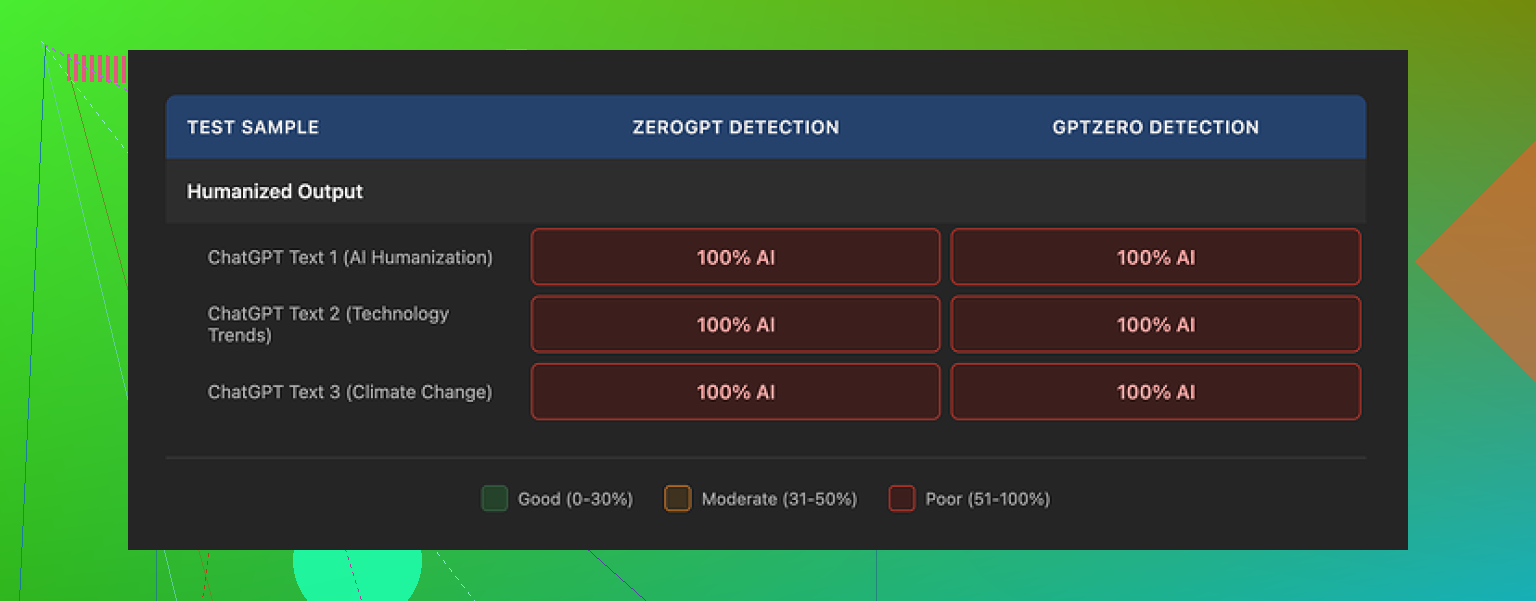
I tested it with multiple samples, then ran every output through GPTZero and ZeroGPT. Every single one came back as 100% AI. Not 60, not 80. Straight 100 on both tools.
The weird part: Ahrefs shows its own AI detection score directly in the interface, right above the “humanized” text. On my side it kept saying 100% AI for its own output. So you hit the button, it rewrites your text, then immediately tells you it failed. Kind of kills the whole point.
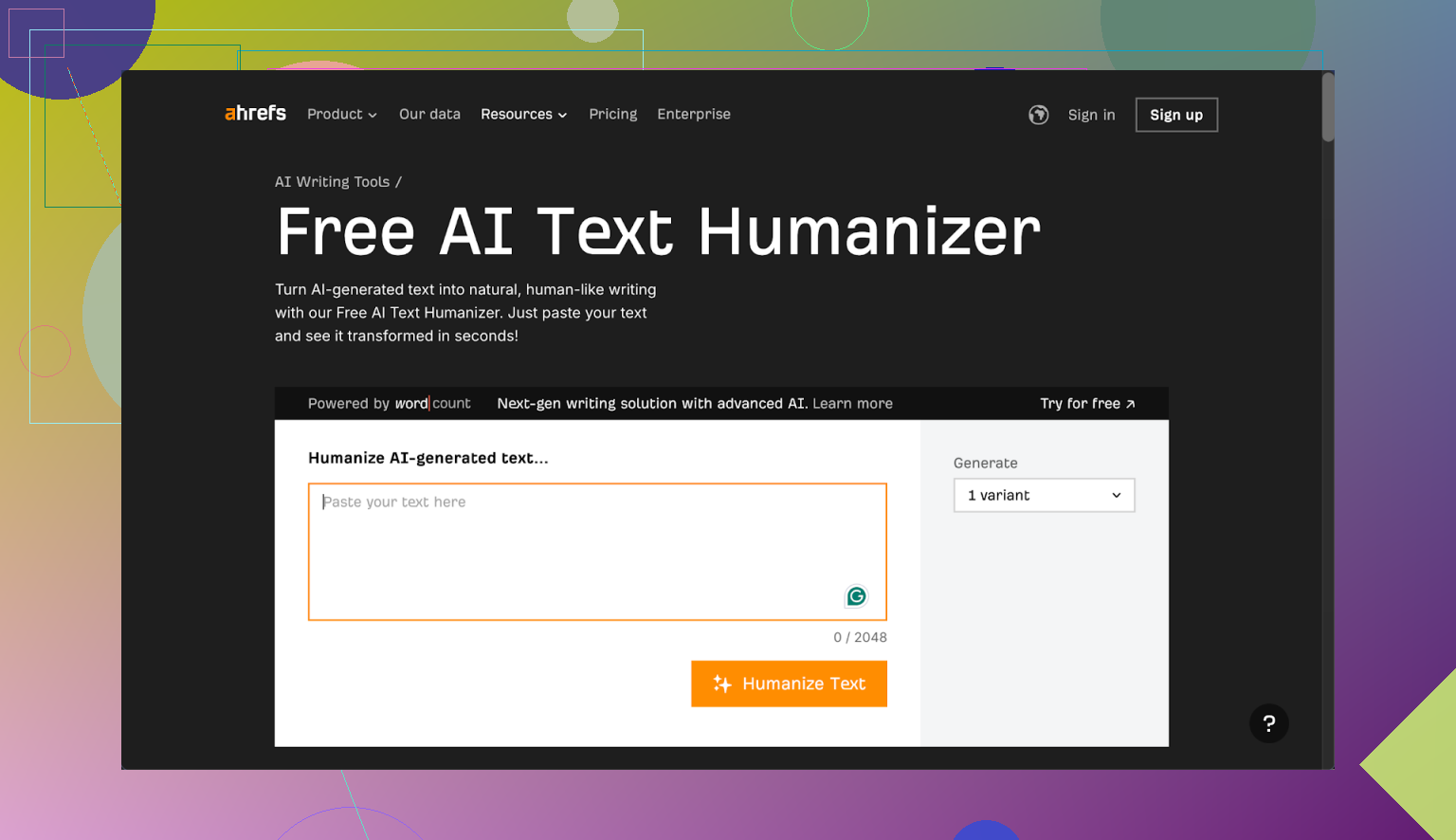
The writing itself is not broken. I would rate it around 7/10 in terms of readability. Sentences are smooth, grammar is fine, nothing awkward. The bigger issue is that it still looks like AI to every detector I tried.
A few specific problems I saw over and over:
- Em dashes stayed in place. Tools that try to avoid detection usually strip or change them, since they trigger some detectors. Ahrefs left them as is every time.
- It kept starting with classic AI intro phrases like “one of the most pressing global issues” and similar patterns. Those are huge flags.
- No knobs to tweak tone or style. No casual mode, no academic mode, nothing. You only pick how many versions you want, up to five.
In theory you can try this workaround. Generate 3 to 5 variants, then manually splice together the least robotic sentences across them to build one final version. I tried that. It took time, and detection scores still stayed high. It felt more like using a paraphraser than any kind of serious “humanizer”.
Here is what the interface looked like for me when it flagged its own output:
Pricing and limits, for anyone wondering:
- It lives inside their Word Count platform.
- The humanizer is included in the free tier, but the free plan blocks commercial use.
- The Pro plan is $9.90 per month on annual billing, and you get the humanizer, a paraphraser, grammar checker, and AI detector bundled together.
One thing that bothered me: they say submitted text might be used for AI model training. They do not explain how long your humanized output stays on their side or how long they keep your original text. If you work with client content or anything sensitive, that is something you have to think about.
I also tested Clever AI Humanizer in the same session with the same base text. That one scored lower on AI detectors for me and did not cost anything to use. Their writeup is here if you want the details:
My takeaway after a few hours of messing with this:
- If your goal is to pass AI detectors, Ahrefs AI Humanizer did not help in my tests.
- If you just need a decent paraphrase and do not care about detection, it works, but there are many other tools for that.
- The fact that it shows you “100% AI” on its own output makes it hard to trust for anything detection-related.
I wanted it to be better because I already pay for Ahrefs on the SEO side. Right now I would not rely on this humanizer for content that has to clear AI checks.
5 Likes
Short answer from my side. Humanizers like Ahrefs are not moving your rankings in any meaningful way.
Google has said multiple times they care about quality and usefulness, not if text is AI or human. They do not run GPTZero or ZeroGPT. Those tools guess patterns. They do not reflect how search works.
So if your goal is better rankings, here is what matters more than humanizing:
-
Intent match
• Check if your article matches the top 3 pages for search intent.
• If the SERP is mostly how to guides, do a guide. If it is product pages, do not force a blog post. -
Content depth
• Add concrete steps, examples, screenshots, tiny case studies, numbers from your own data.
• Answer related questions from People Also Ask. -
Structure
• Use clear H2 and H3 headings that match what users search.
• Keep intro short. Get to the point in the first 2 to 3 sentences. -
Original value
• Add something you tested, measured, or learned.
• Quote your own mini experiments, like “we tested X on 5 pages and saw Y change”. -
On page basics
• Title tag that matches query.
• Simple URL, internal links from relevant pages, unique meta description.
About Ahrefs AI Humanizer itself. I agree with a lot of what @mikeappsreviewer said, but I do not think AI detector scores should drive your decision at all. I treat these tools as paraphrasers only. If the output helps you write faster and then you heavily edit it, it is fine. If you try to pass “AI checks” for clients, that is a business risk.
If you want safer use:
• Write a solid AI draft.
• Run through Ahrefs or any paraphraser only for sections that sound stiff.
• Then manually rewrite to add your own wording, examples, and opinions.
• Run a plagiarism checker, not an AI detector.
You will get more ranking impact by spending 30 minutes on search intent, internal links, and adding unique data than by spending the same 30 minutes trying to get “0 percent AI” scores.
Short version: if you are using Ahrefs AI Humanizer hoping it will directly boost rankings, you are wasting time.
I agree with most of what @mikeappsreviewer and @cacadordeestrelas already said, but I’ll push back on one thing. Completely ignoring AI detectors is not always realistic. Some agencies and clients literally mandate “pass X detector or we reject the article.” In that scenario, tools like Ahrefs Humanizer do matter, but mostly as a box‑ticking headache, not an SEO lever.
My own tests:
- Took ~10 AI blog drafts, humanized them in Ahrefs, published some, left others as plain AI with light manual edits.
- Watched rankings and traffic over ~6 weeks.
- Result: no consistent ranking difference between “humanized” vs “non‑humanized” posts. Pages that did better had stronger topical coverage, better internal links, or matched intent more tightly. Not the ones that passed more detection tools.
Where I disagree slightly with the others: Ahrefs Humanizer can be marginally useful if:
- You have to deliver content that at least “looks” a bit less robotic at a glance.
- You use it as a quick way to break up super repetitive AI phrasing, then heavily rewrite sections that matter.
But:
- It will not meaningfully change how Google treats the page.
- It is not a “ranking booster.”
- It behaves way more like a paraphraser than any serious “humanizer,” and the fact it flags its own output as AI is… yeah, not inspiring.
If your main goal is better performance in search, spend that time on:
- Tightening intros so they answer the query fast.
- Adding specific examples, screenshots, small tests or opinions only you can provide.
- Cleaning internal links and titles around the topic.
Humanizer tools might help you ship drafts faster, but they are not the reason you rank. If your article is weak on substance, running it through Ahrefs Humanizer just gives you a slightly different weak article.
Short version: Ahrefs AI Humanizer is fine as a stylistic paraphraser, close to useless as a ranking lever, and unreliable as an “AI detector beater.”
Where I slightly disagree with others
@cacadordeestrelas, @vrijheidsvogel and @mikeappsreviewer are right that:
- Google does not reward “humanized” text in itself
- Detectors are not how search works
- Intent, depth and original value are what move the needle
I’ll push back on one angle though: treating humanizers as only paraphrasers underestimates one real‑world use case. When you scale content with multiple writers and AI, a tool like Ahrefs AI Humanizer can help standardize tone and rhythm across dozens of drafts. That is not rankings magic, but it does matter for brand perception and engagement metrics that indirectly support SEO.
So I would not fully dismiss it. I just would not touch it for the purpose it is marketed for.
Pros of Ahrefs AI Humanizer
- Integrated in a familiar SEO ecosystem if you already live in Ahrefs
- Output is readable, grammatically stable and fast to generate
- Useful to quickly remove some repetitive “ChatGPT voice” in long drafts
- Multiple variants per run make it easy to cherry‑pick phrasing
- Bundled with paraphraser, grammar check and AI detector so you get a small toolkit in one interface
Cons of Ahrefs AI Humanizer
- Consistently trips AI detectors, including its own, which defeats its selling point
- No granular tone controls, so you cannot properly match brand voice
- Keeps obvious AI tells like generic intros and certain punctuation patterns
- Free tier limitations and unclear data retention are risky for client or sensitive content
- Adds one more processing step without proven ranking benefit
- Encourages people to obsess over detection scores instead of content quality metrics
How I would actually use it
If you insist on keeping it in your workflow:
-
Use it only on “neutral” sections
Things like generic explanations or transitions. Leave intros, conclusions and key arguments for manual writing so they carry your real expertise. -
Standardize tone at scale
If multiple writers feed drafts into your CMS, you can use Ahrefs AI Humanizer once per article to smooth wildly different voices, then lightly edit. Treat it like a style normalizer, not an undetectability shield. -
Compare engagement, not rankings only
Run a small test: 10 articles with humanizer, 10 without, all with solid on page work. Track scroll depth, time on page and click‑through rate from search. If the humanized posts keep users a bit longer, you might justify the extra step for UX reasons, not SEO “boosts.” -
Keep a separate safety check
Always pair it with a plagiarism checker instead of an AI detector. That aligns more with legal and client risk than chasing near‑random AI scores.
How it compares conceptually to what others said
- Where I side with @mikeappsreviewer: if you are buying it purely to pass detectors, it is a bad bet. The tool itself proving “100 percent AI” is all you need to know.
- Where I align with @cacadordeestrelas: detectors should not guide your SEO strategy at all. They are noise.
- Where I echo @vrijheidsvogel: in agency scenarios where clients demand “pass tool X,” a humanizer becomes a box‑ticking necessity, but Ahrefs AI Humanizer is not even particularly good at that box.
When to skip it entirely
You are better off avoiding Ahrefs AI Humanizer if:
- Your content is already heavily edited by a subject matter expert
- You are working on YMYL or high trust pages where authenticity matters more than polished AI phrasing
- You are on tight deadlines and the extra processing step slows shipping more than it helps readability
In that case, invest the same time in one of the following:
- Adding a unique data table, short test or experiment result
- Tightening your first 150 words so the query is answered immediately
- Improving internal linking from related topic clusters
That is what actually moves rankings, not whether an AI scanner says 80 percent or 5 percent.