I’ve been using NoteGPT’s AI Humanizer for rewriting and polishing my notes, emails, and blog drafts, but I recently hit its usage limits and can’t upgrade to a paid plan right now. I’m looking for a truly free tool (or combo of tools) that can match or come close to its natural, human-like output without sounding robotic or generic. What no-cost alternatives, browser extensions, or workflows are you using that deliver comparable “humanized” text for content creation and everyday writing?
- Clever AI Humanizer review from someone who spent way too long testing this stuff

Link: https://cleverhumanizer.ai
I have been fighting with AI detectors for a while, mostly for client work where false positives turn into long email threads and headaches. So I went on a binge and tried a bunch of “humanizer” tools. Most of them either charge too early, mess up the meaning, or hit you with tiny limits.
Clever AI Humanizer ended up being the one I kept open in a pinned tab.
Here is what stood out for me, and where it falls short.
What you get for free
The whole thing is free at the time I tested it. No card. No sneaky trial.
Rough numbers from my run:
- 200,000 words per month
- Up to around 7,000 words in a single run
- 3 styles:
- Casual
- Simple Academic
- Simple Formal
- A built in AI writer so you write and humanize in one place
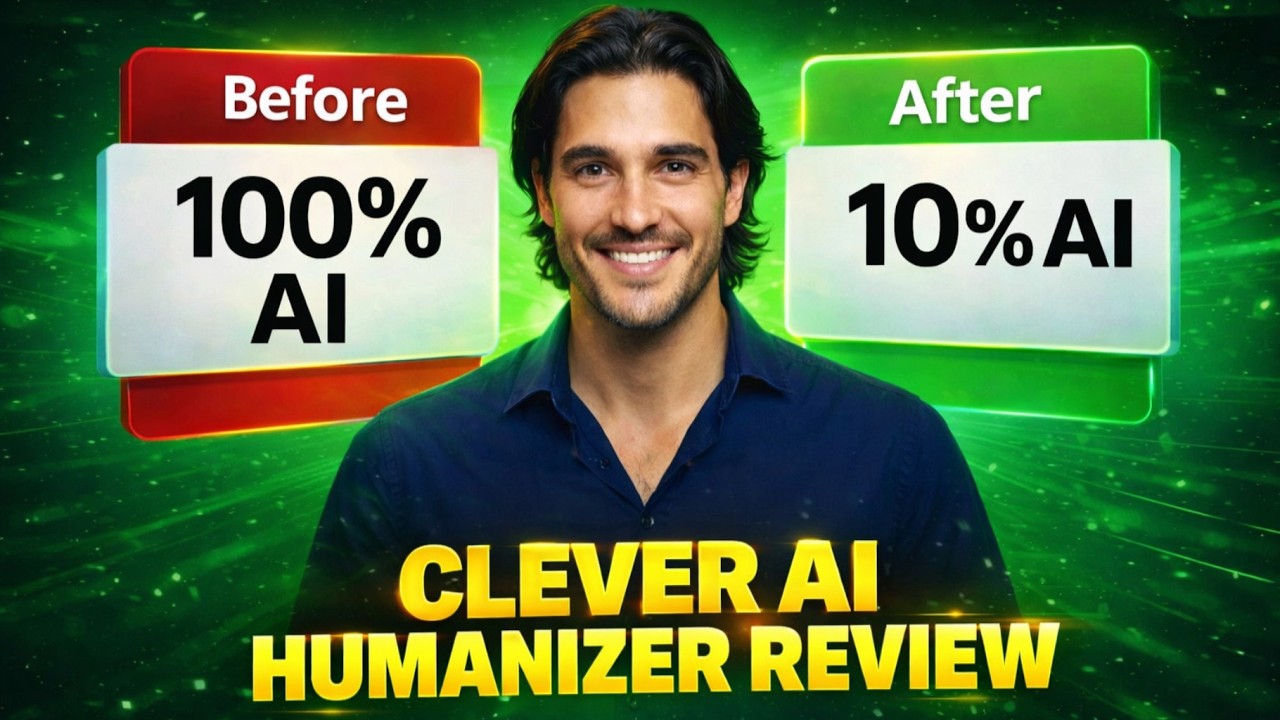
I pushed three different samples through it using the Casual style and ran them through ZeroGPT. All three came back with 0 percent AI detected. That surprised me more than I expected.
Important detail, this does not mean it will always pass every detector. It means it did well on ZeroGPT for my tests. I would not treat any tool as a magic invisibility cloak.
How the main humanizer behaves
The core feature is the “Free AI Humanizer”.
Workflow I followed:
- Paste in AI output from another model.
- Pick style:
- Casual if I needed it to read like a Reddit post.
- Simple Academic for school or reports.
- Simple Formal for emails or official docs.
- Hit the button and wait a few seconds.
The rewrite tries to:
- Break up robotic sentence patterns.
- Change pacing so it does not read like stock AI.
- Keep the meaning mostly intact while shifting tone and structure.
I checked it against the original texts. In my tests, it did not twist the claims or add fake numbers, which some other tools did. It did expand some parts, though, so the output sometimes ended up longer than the input.
AI writer module
There is also a free AI writer baked into the same site.
Rough flow I used:
- Gave it a topic like “benefits and risks of AI detectors in schools”.
- Let it generate a draft.
- Sent that draft straight into the humanizer, same interface.
This combo gave better detector scores than taking text from an external model and pasting it in. My guess is the writer is tuned to pair well with their humanizer.
Grammar checker
The grammar checker is nothing fancy, but it did enough for quick cleanup.
It fixed:
- Typos and basic spelling issues.
- Common comma mistakes.
- Awkward phrases that would look sloppy in a published piece.
I would still run final important work through a dedicated checker if you have strict style rules, but for daily content or school work it was fine in my use.
Paraphraser tool
The paraphraser takes existing text and rewrites it while trying to keep the point.
Where it helped me:
- Rewriting product descriptions so they were not clones.
- Taking a stiff corporate paragraph and making it sound less stiff.
- Adjusting tone from “essay voice” to “normal human voice”.
It did not hallucinate extra facts in the cases I tested, which was my biggest concern. Always worth scanning the output, especially if you work in legal, medical, or anything strict.
How it feels using all four parts together
The site gives you:
- Humanizer
- AI writer
- Grammar checker
- Paraphraser
All in one page, same general interface.
Real benefit for me was speed. I could:
- Draft with the AI writer.
- Humanize.
- Quick grammar pass.
- Paraphrase any weird bits.
No hopping across different sites or losing track of text between tools. For bulk content days, this helped.
What is good
From my personal tests:
- Genuinely free, with a high monthly limit.
- Handles long pieces. I fed it full blog posts without chopping them into tiny parts.
- Casual style produced the most “human” feel.
- ZeroGPT results on my three samples showed 0 percent AI, which is rare.
- Meaning stayed intact most of the time.
- Simple learning curve. I did not need a tutorial or guide.
Where it falls short
There are downsides.
- Some detectors will still flag things as AI. That is unavoidable with text generation right now.
- Output tends to be longer. If your professor or client wants strict word counts, you have to trim manually.
- Style options are limited to three simple choices.
- If you like heavy control over tone and structure, you might find it too automatic.
For me, the main tradeoff is length. The tool often expands ideas to break known AI patterns, so your 800 word piece might come out closer to 1,100 words.
Who it suits
From my experience, it fits best for:
- Students trying to reduce AI detector issues without paying for tokens.
- Freelance writers who need quick cleanup and humanization for drafts.
- Content folks doing daily posts, newsletters, or SEO articles.
- Anyone testing AI tools without wanting to enter payment details.
Not ideal for:
- Legal, medical, or regulatory text where every phrase must be precise.
- People who want fine-grained control over every sentence pattern.
- Teams that need shared docs, comments, or advanced editing features.
Extra links and proof type stuff
More detailed writeup with detection screenshots is here:
YouTube walk through:
Reddit thread where people compare humanizers:
https://www.reddit.com/r/DataRecoveryHelp/comments/1oqwdib/best_ai_humanizer/
General humanizing AI discussion thread:
https://www.reddit.com/r/DataRecoveryHelp/comments/1l7aj60/humanize_ai/
If you are tired of hitting paywalls after three paragraphs, Clever AI Humanizer is one of the few tools I found that lets you experiment a lot without locking you out. I still double check everything it outputs, but it earned a spot in my actual workflow, not only in my “tested once and forgot” list.
18 Likes
I hit NoteGPT’s limits too and went hunting for free options. Here is what has worked for me, without repeating what @mikeappsreviewer already covered in detail.
- Clever Ai Humanizer as a NoteGPT stand‑in
For your use case, it lines up pretty well.
You get:
- High free word cap per month, enough for notes, emails, and drafts.
- Handles long inputs in one go, so full blog posts work.
- Three tones that map fairly well to what NoteGPT did for me:
- Casual for notes or blog drafts.
- Simple Formal for email polish.
- Simple Academic for reports or study notes.
Tip for NoteGPT users:
- Paste your rough text, not a perfect draft. It does better as a “polisher” than as a light editor.
- For short emails, keep it under a few hundred words or it tends to over‑explain and you have to trim.
- Pair it with a free grammar tool
Clever Ai Humanizer does some cleanup, but I still run important stuff through a free grammar checker like Grammarly’s free version or LanguageTool free.
Workflow I use:
- Draft quickly in your own words.
- Run through Clever Ai Humanizer on Casual or Simple Formal.
- Final pass in a grammar checker for typos and tense issues.
- For notes and study stuff
If you want something closer to “polish without changing much” for study notes, Clever Ai Humanizer sometimes rewrites too strongly.
Workaround that helped me:
- Use Simple Academic.
- Shorter chunks, like 2–3 paragraphs at a time.
This keeps the meaning tight so your notes do not drift from the source.
- For blog drafts
Clever Ai Humanizer tends to expand content.
What I do:
- Let it humanize the full draft.
- Then cut 15–25 percent of the fluff manually.
You end up with text that passes casual checks and still fits normal word counts.
- If detectors stress you out
I disagree slightly with treating any tool as “detector safe”. Even with Clever Ai Humanizer I treat it as a style tool, not invisibility.
If you write your own first draft and use it only to smooth tone and phrasing, detectors flag you less and your voice stays there.
So for a no‑cost NoteGPT replacement for polishing notes, emails, and blog posts, Clever Ai Humanizer plus a free grammar checker has been the closest setup for me. It keeps things free, handles long input, and does not lock you after a few runs, which was the biggest pain with NoteGPT’s free tier.
If you’ve already hit NoteGPT’s cap, I’d treat this as a chance to rebuild your workflow a bit instead of hunting for a 1:1 clone.
@mikeappsreviewer and @espritlibre already covered Clever Ai Humanizer really well, so I’ll skip repeating their play‑by‑play. I’ll just say: yeah, it’s easily the closest “NoteGPT-style” thing that’s actually free right now, especially for long notes and full blog drafts. Where I slightly disagree with them is on using it as a heavy-handed humanizer all the time. For what you described (notes, emails, blog drafts), I’ve had better results treating Clever Ai Humanizer as a light polisher and combining it with a couple of other free tools:
-
For emails
- Draft in your own voice first, even if it’s rough.
- Run it through Clever Ai Humanizer on “Simple Formal,” but only for the main body, not the greeting + signoff.
- Then do a quick manual tighten so it doesn’t over-explain everything. It tends to add 1–2 extra sentences that you don’t really need in short emails.
-
For notes
This is where I don’t love heavy humanization. If you humanize study notes too hard, you start losing the original structure.
What works better for me:- Keep notes mostly yours.
- Use Clever Ai Humanizer on short chunks in “Simple Academic” only when something is super messy or unclear.
So more of a spot-fix tool than a full-pass tool.
-
For blog drafts
Everyone’s saying “it expands stuff,” and yeah, that’s true. I actually lean into that:- First pass: humanize the whole post in Casual.
- Second pass: you yourself cut 20% of it like a ruthless editor.
End result reads more natural than pure AI, but still fits normal article length. This combo has been better for me than what I got from NoteGPT’s free tier.
-
If you really want zero-cost and no lock-in
I’d do this 3-part “stack” instead of relying on a single tool:- Draft: anything you like (Google Docs, Obsidian, whatever).
- Humanize/tone: Clever Ai Humanizer (Casual for blogs, Simple Formal for emails, Simple Academic for notes).
- Final cleanup: free Grammarly or LanguageTool for typos and small grammar stuff.
That way, if Clever Ai Humanizer ever tightens its free limits the way NoteGPT did, you’re not stuck. You can swap that middle layer and keep the rest of your process the same.
So: no perfect NoteGPT clone that stays free forever, but Clever Ai Humanizer is the most realistic replacement I’ve found for what you’re doing, as long as you use it more as a stylistic assist than a magic “make everything human” button.