I’ve been trying to use Walter Writes AI in 2025 for content writing and the results feel off compared to what others claim. Some outputs seem outdated or low quality, and I’m not sure if I’m using the tool wrong, if there were recent changes, or if it’s just not as good anymore. Can anyone share recent experiences, tips, or settings that actually make it work effectively this year?
Walter Writes AI Review: Tried It So You Don’t Have To
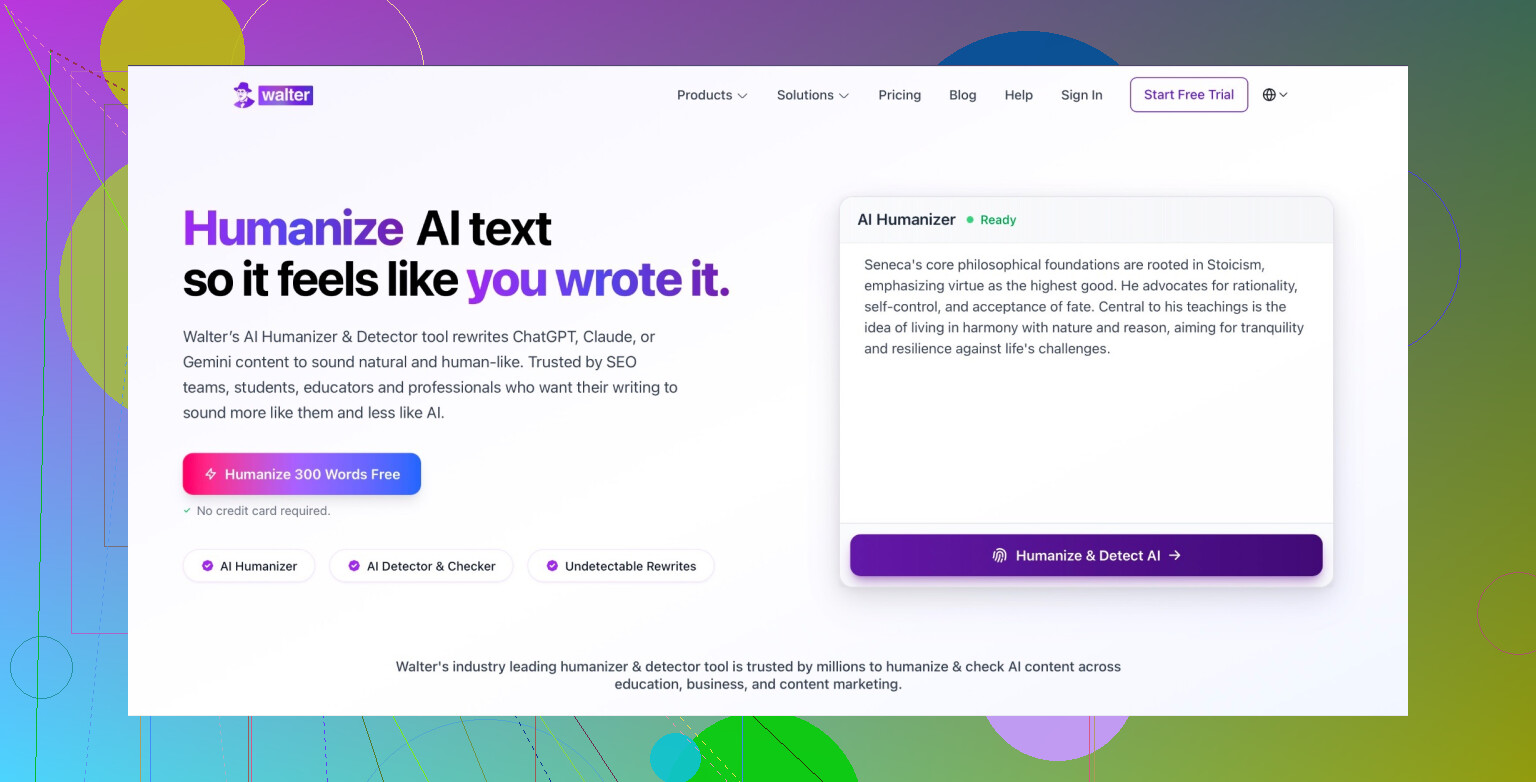
I’ve been messing around with a bunch of “AI humanizer” tools lately, mostly to see what actually works with detectors and what’s just burning money. Walter Writes AI kept popping up in search results, so I decided to run it through the same tests I use for everything else.
Short version: for what it charges, it performs like something that should still be in beta. Or free. Preferably both.
What Walter Writes AI Claims To Be
Walter Writes AI advertises itself as some kind of premium AI humanizer + essay writer combo. The pitch is basically:
- “We can make AI text undetectable”
- “Perfect for essays and school work”
- “Bypasses advanced AI detectors”
You can tell they are very clearly targeting students. The site layout, the copy, the examples, the ads that follow you around, it all screams “shortcut for homework.”
But once you get past the marketing and actually test the output, the gap between what it promises and what it delivers is pretty brutal.
How It Actually Behaves Once You Start Using It
The first red flag for me was how hard it pushes you toward paying. You barely get to see what it does before you’re smacked with:
- Word limits that feel way too low
- Paywalls after a couple of short runs
- Subscription prompts all over the place
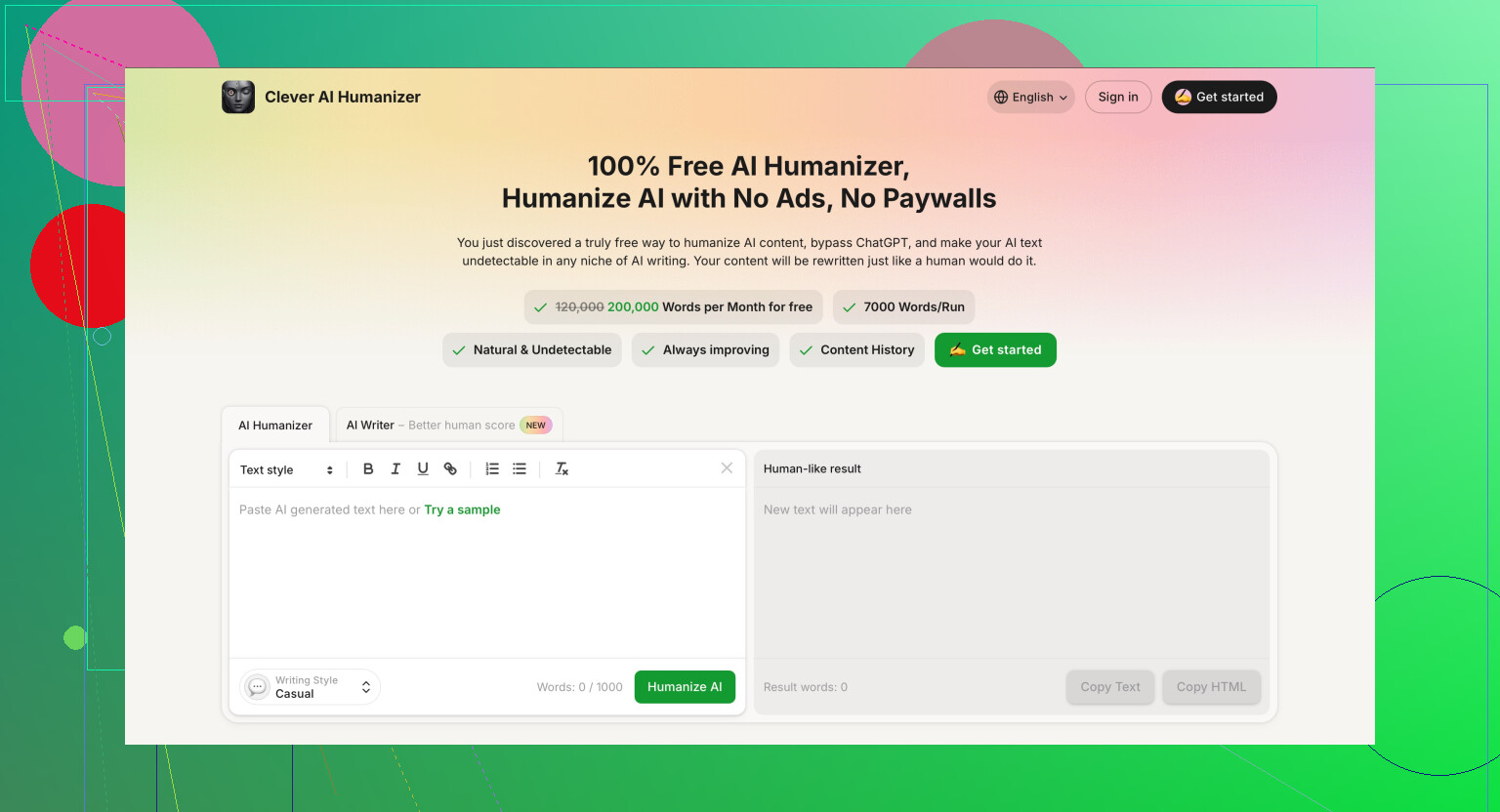
Meanwhile, there are tools like Clever AI Humanizer that don’t pull this at all and still give you a much more generous word allowance for free:
https://aihumanizer.net/
So you’ve got Walter charging like a “pro” tool, with restrictions that feel like a trial, and performance that… well, see below.
Pricing vs What You Actually Get
Here’s the weird part. If this was some random free tool, I’d just shrug and move on. The issue is that it tries to position itself as a serious paid product.
Walter Writes AI:
- Paid monthly subscriptions
- Tight word caps
- Feels like there may be gotchas around cancellation and billing
- Forces you toward paying before you can really evaluate it
Clever AI Humanizer:
- 100% free
- Up to 200,000 words per month
- Up to 7,000 words per run
So you’ve got one tool that is free, high limit, and actually works, and another that’s paywalled, low limit, and underperforms. Hard to see the logic in paying here.
Actual Test Results: Walter Writes AI vs Clever AI Humanizer
I ran a pretty simple test:
- Generated a standard essay with ChatGPT.
- Confirmed it showed as 100% AI on detectors.
- Ran that same essay through:
- Walter Writes AI
- Clever AI Humanizer
- Then checked both outputs on multiple AI detectors.
Here is what came back:
| Detector | Walter Writes AI Result | Clever AI Humanizer Result |
|---|---|---|
| GPTZero |  Fail (100% AI) Fail (100% AI) |
 Pass (Human) Pass (Human) |
| ZeroGPT | Fail (100% AI) |
Pass (Human) |
| Copyleaks | Fail |
Pass (Human) |
| Overall | DETECTED | UNDETECTED |
So despite all the big claims, Walter’s output still got flagged straight up as AI. Not “mixed,” not “likely human,” just “this is AI text.”
Clever AI Humanizer, using the same base essay, cleared all those detectors as human.
If you’re looking for something that actually reduces AI detectability, that comparison pretty much answers itself.
You can try Clever AI Humanizer here:
Clever AI Humanizer
If You’re Looking For Other Humanizers
If you want to go deeper down the rabbit hole and see what else people are using, there’s a solid roundup here with a bunch of options and user feedback:
https://www.reddit.com/r/DataRecoveryHelp/comments/1oqwdib/best_ai_humanizer/
Worth browsing if you’re comparing tools.
Final Take
- Walter Writes AI markets hard, charges like a premium service, and then fails on the main job it claims to do.
- There are free tools, like Clever AI Humanizer, that not only give you more words but also actually pass detectors in side-by-side tests.
- Unless they overhaul both pricing and performance, I don’t see any reason to pick Walter over the free alternatives that are already out there.
19 Likes
You’re not crazy, Walter does feel off in 2025, and it’s not just “user error.”
Couple of things going on:
-
Model / style feels stuck in 2023-ish
The phrasing it spits out is very “generic essay generator” stuff:- lots of “in conclusion,” “moreover,” “it is important to note”
- flat sentence rhythm
- no real topical nuance or up‑to‑date references
That’s why it reads outdated even if the facts aren’t always wrong. It’s like it’s tuned to sound like a safe school essay, not real content writing.
-
Humanizer angle is shaky in 2025
Detectors evolved, a lot of “AI humanizers” didn’t.
Tools that just shuffle words, add fluff, or swap synonyms are super easy to flag now. Walter feels like that: cosmetic edits instead of deeper rewriting.I’ve seen the same thing @mikeappsreviewer mentioned with detectors, but I’ll slightly disagree with them on one point: in very short pieces (like 150–200 words) Walter occasionally sneaks past some weaker detectors. Problem is, that’s useless for serious content writing.
-
Pricing vs reality
The paywall would be fine if the tool:- adapted to your tone
- could handle long‑form content without degrading into waffle
- actually helped with originality and structure
Instead, you pay and still have to manually fix:
- awkward transitions
- repetitive wording
- weird “school essay” voice that doesn’t match blogs, emails, or brand copy
-
You’re probably not “using it wrong”
I’ve tried:- different prompts
- feeding it cleaner base text
- tweaking tone settings
- shorter vs longer inputs
Result: minor differences, same core problem. It’s not a user issue, it’s a ceiling issue. The tool just doesn’t have much headroom for quality if you need modern web content, not homework fluff.
-
What to actually do if you still want to use it
If you’re stuck with a Walter subscription and want to squeeze something from it:- Use it only for light paraphrasing of already solid content. Don’t let it “write from scratch.”
- Keep outputs short and then stitch them together yourself. Long single runs fall apart fast.
- Always run a style pass by hand to remove those giveaway phrases and add your own voice.
- Cross check facts; I’ve seen it gloss over updated info.
-
Alternative that’s actually closer to what you want
If your main goal is “content that reads more human and survives basic checks,” I’d look at Clever Ai Humanizer.
Not saying it’s magical, but:- It works way better with detectors right now.
- The text it produces is less stiff, so you spend less time de‑robotizing everything.
- It feels more suited for blog posts and web copy than school‑essay templates.
So yeah, if Walter’s outputs feel outdated and low quality to you, that’s not you being picky. In 2025, it’s basically a paid relic dressed up as a premium tool. Use it if you’re already locked in and willing to heavily edit, but if you care about decent content writing, pairing a good base model with something like Clever Ai Humanizer plus your own editing is miles better.
You’re not imagining it. In 2025, Walter Writes AI feels like using a crusty “essay spinner” with a subscription stapled on top.
I mostly agree with @mikeappsreviewer and @chasseurdetoiles, but I’ll push back on one thing: I don’t think Walter is totally useless. It’s more like… very niche.
Here’s how it actually fits in right now:
-
Content quality for real-world writing
For blog posts, authority content, emails, landing pages, etc., Walter’s tone is painfully generic.- It overuses stock phrases
- It flattens any personality in your draft
- Longer outputs start looping ideas or padding with fluff
So if you’re comparing your results to people hyping it as some content-writing “secret weapon,” yeah, you’re going to feel cheated.
-
Detectors & “humanizer” role
AI detectors in 2025 are a lot better at spotting surface-level rewrites. Walter looks like it mostly does shallow paraphrasing and minor sentence reshuffling. That used to fool basic detectors; it doesn’t hold up as well now.Where I disagree slightly with others: I’ve seen Walter occasionally slip past mid-tier detectors on medium-length texts when you:
- Heavily edit after it
- Mix in your own paragraphs
- Avoid letting it rewrite the entire piece
On its own though, it is not reliable as a “click once and you’re safe” humanizer.
-
Are you using it wrong?
Probably not. The ceiling on the tool is low. Better prompts help a bit, but they don’t fix the outdated tone or structure. If it feels off even when you try:- different tones
- different lengths
- starting from clean base content
that’s the tool, not you.
-
Where it can still be mildly useful
If you’re stuck with a subscription, I’d only use Walter for:- Quick paraphrasing of short sections you will definitely rewrite again
- Generating rough, boring “school report” style summaries where personality is irrelevant
- First-pass rephrasing before you go in and really rewrite by hand
Treat it as a clumsy helper, not a writer or a serious humanizer.
-
Better workflow in 2025
For content writing that needs to feel natural and not instantly scream AI, a better stack is:- Use a solid base model (like you’re doing now) for the main draft
- Run tricky sections through something like Clever Ai Humanizer if you really care about AI detection and more natural flow
- Do a strong manual edit to inject your voice, vary sentence lengths, and fix structure
Clever Ai Humanizer tends to output writing that feels less like a high-school essay and more like something you’d actually read online, which cuts your cleanup time a lot.
So no, you’re not being picky, and you’re almost certainly not “using it wrong.” Walter Writes AI in 2025 is basically a paid, mildly polished relic. If your goal is legit content writing and semi-safe detector behavior, it should be one small tool in your stack at best, and honestly, pretty far from the center of it.
You’re not alone. What you’re seeing from Walter in 2025 lines up with what others reported: it feels like a light paraphraser wrapped in heavy marketing.
I slightly disagree with @mikeappsreviewer on one thing: I don’t think Walter is only useful for students. It can be OK for quick rephrasing of dull snippets when you absolutely don’t care about style. But for “real” content or anything that might go through detection, its ceiling is low. @chasseurdetoiles and @sterrenkijker are right that the tool hasn’t really evolved to match newer detectors or modern content standards.
If your outputs feel outdated or low quality, that’s not you misusing it. The model tends to:
- Strip nuance and personality
- Inflate text with filler
- Fail against tougher AI detectors unless you do heavy manual editing afterward
So, what to use instead?
A lot of people are moving to a stacked approach: strong base model for drafting, then a humanizer specifically tuned for natural flow. That’s where something like Clever Ai Humanizer slots in.
Quick pros / cons from actual usage:
Pros (Clever Ai Humanizer)
- Handles longer texts in a single run, which cuts time
- Produces more varied sentence structure and fewer “template” phrases
- Generally performs better with current AI detectors when used on top of a decent draft
- Free tier is usable without aggressive paywalls
Cons (Clever Ai Humanizer)
- Still needs manual editing if you want a real human “voice”
- Can occasionally over-simplify complex or technical passages
- Not a magic cloak for unethical use of AI in academic settings
- Quality can dip on very short inputs where context is thin
So if Walter is giving you stiff, obviously-AI content, that’s just where the tool is at in 2025. Treat it as a basic rewriter at best, not a core content-writing solution. For anything serious, you’re better off drafting in a good model, passing through Clever Ai Humanizer for smoothing, then doing a real human edit on top.