I recently ran into an issue involving a HIX bypass review and I’m confused about what it means, how it affects my eligibility, and what I’m supposed to do next. I’m worried I might lose coverage or make a mistake responding to the notice. Can someone explain how the HIX bypass review works, what documents or steps are usually required, and what timelines I should be aware of so I don’t miss anything important?
HIX Bypass AI Humanizer review from someone who spent too long testing this thing
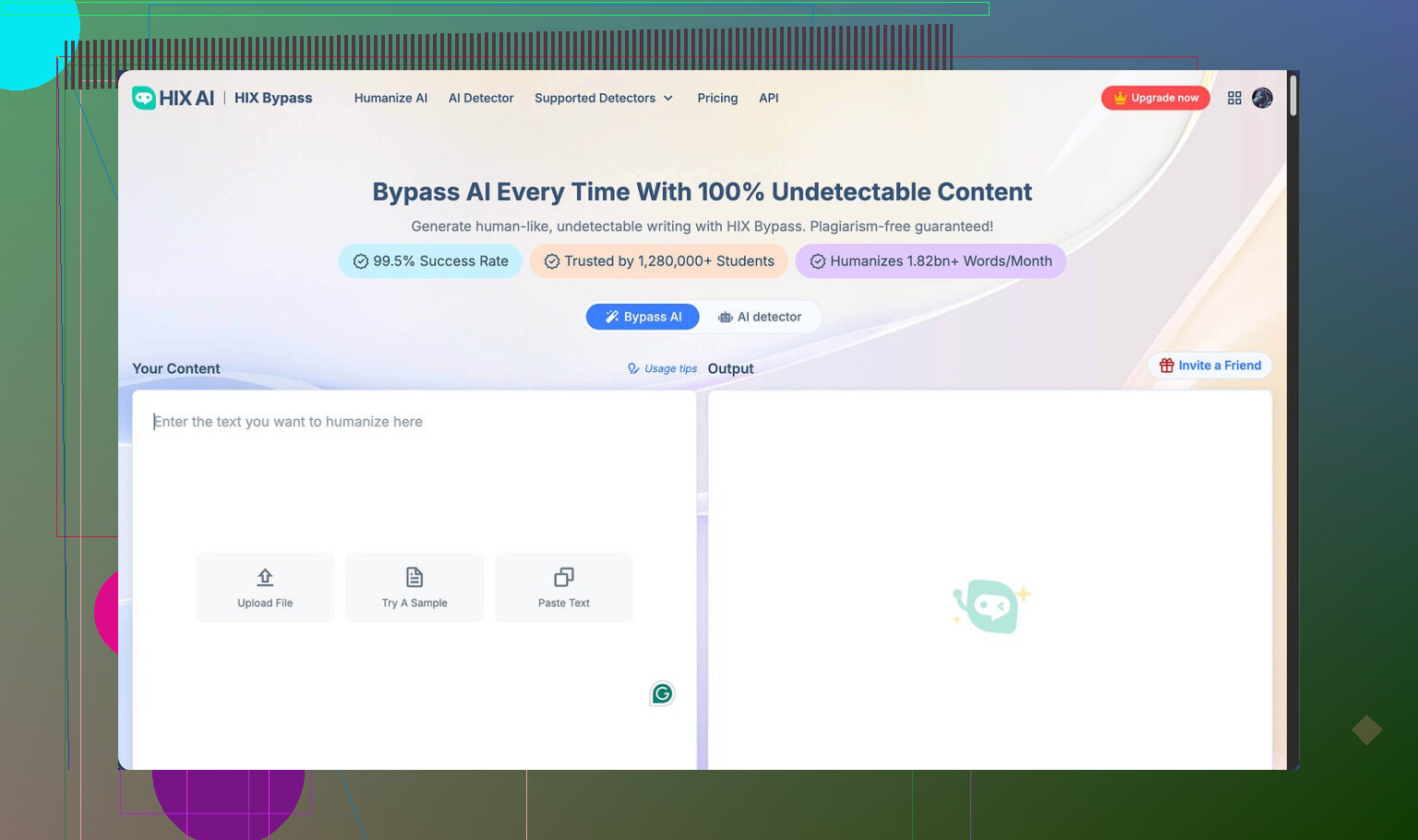
HIX Bypass looks solid at first glance. Big claim on the front page: “99.5% success rate.” Logos from Harvard, Columbia, Shopify. The kind of stuff that makes you pause and think, alright, maybe this works.
I tried it on two different texts and the results were nowhere near what the marketing implies.
Here is the page I came from, by the way, so you can see what they are selling:
https://cleverhumanizer.ai/community/t/hix-bypass-review-with-ai-detection-proof/37
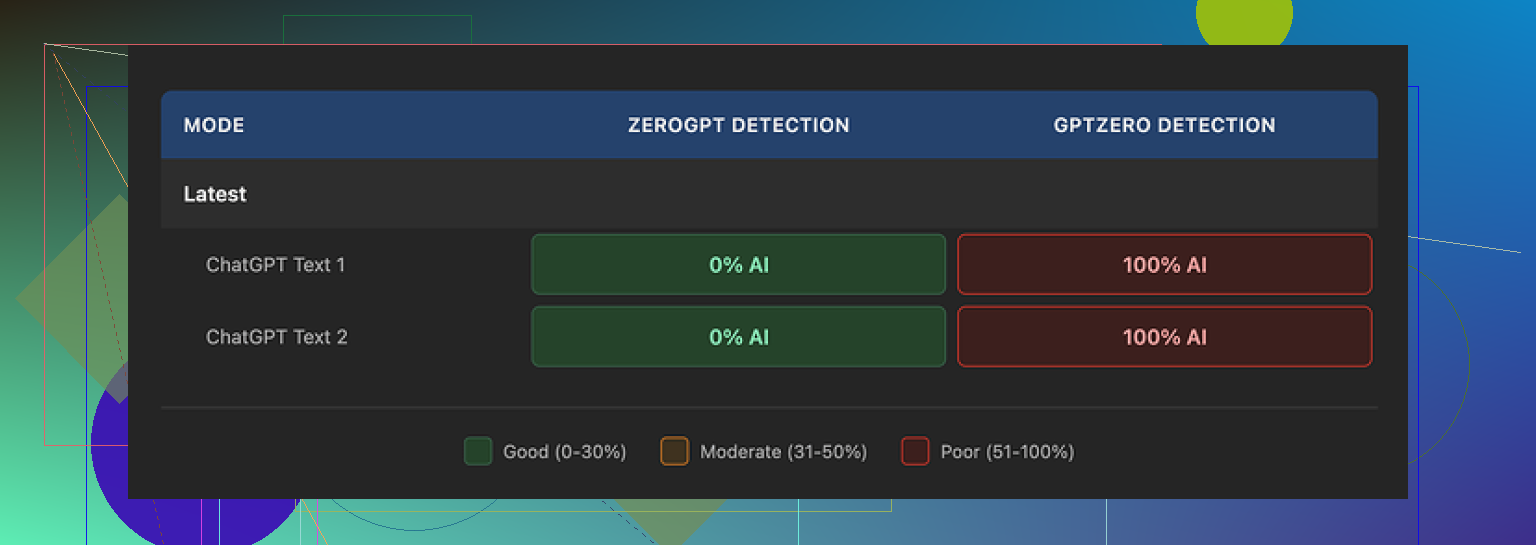
Detection results
I pushed two samples through HIX Bypass, then ran the outputs against a few public detectors.
Here is what happened:
• ZeroGPT: both samples passed without any issues, scored as human
• GPTZero: both samples flagged as 100% AI generated
The funny part, or sad part, depending on your patience level, is their built-in detector panel. It showed “Human-written” results across most detectors it aggregates, even though GPTZero called the same text fully AI every time.
So on their own interface, the tool looked safe. Once I moved outside their checker, the illusion broke fast.
Here is the screenshot of what I saw during testing:
Writing quality
Ignoring detection for a minute, I checked the text as writing.
I would rate the quality at roughly 4 out of 10.
Stuff I spotted in multiple outputs:
• It kept using em dashes, even though many people try to avoid them in AI rewrites because they show up a lot in language model output.
• One sentence was partly mangled. It looked like the generator dropped half a clause and glued what was left onto the next line. It read like someone hit backspace mid thought.
• Another sample wrapped an entire sentence in square brackets with no reason. Not for citation, not for an aside. It just sat there in brackets like a leftover editing note.
If you plan to paste the output straight into anything important, you will have to clean it by hand, and you still risk the tone sounding off.
Limits, pricing, and refund trap
The free tier is barely usable for testing.
• Free account: 125 words total across the whole account
• Refund policy: 3 days, and only if you stay under 1,500 words used
So if you buy a paid plan, try a handful of decent sized paragraphs, then realize it fails your detector tests, you can cross that refund off. You go past 1,500 words faster than you expect if you send in longer articles or blog posts.
On paper, the pricing looks cheap. The “Unlimited” annual plan is shown as around $12 per year. That sounds safe enough until you read the terms.
Important bits from the terms of service
Two things in the terms made me pause:
-
They reserve the right to change usage limits after you buy.
So “Unlimited” is less clear than it appears. They keep the option to lower your available usage later. -
They give themselves broad rights over submitted content.
If you value ownership and privacy of your text, this part is not great. It reads like they want wide permission to use, store, and process whatever you paste.
On top of that, if you stay on the free tier, your inputs might be used to train their internal models. That is written in their policy. So anything personal or sensitive has no place there.
What worked better for me
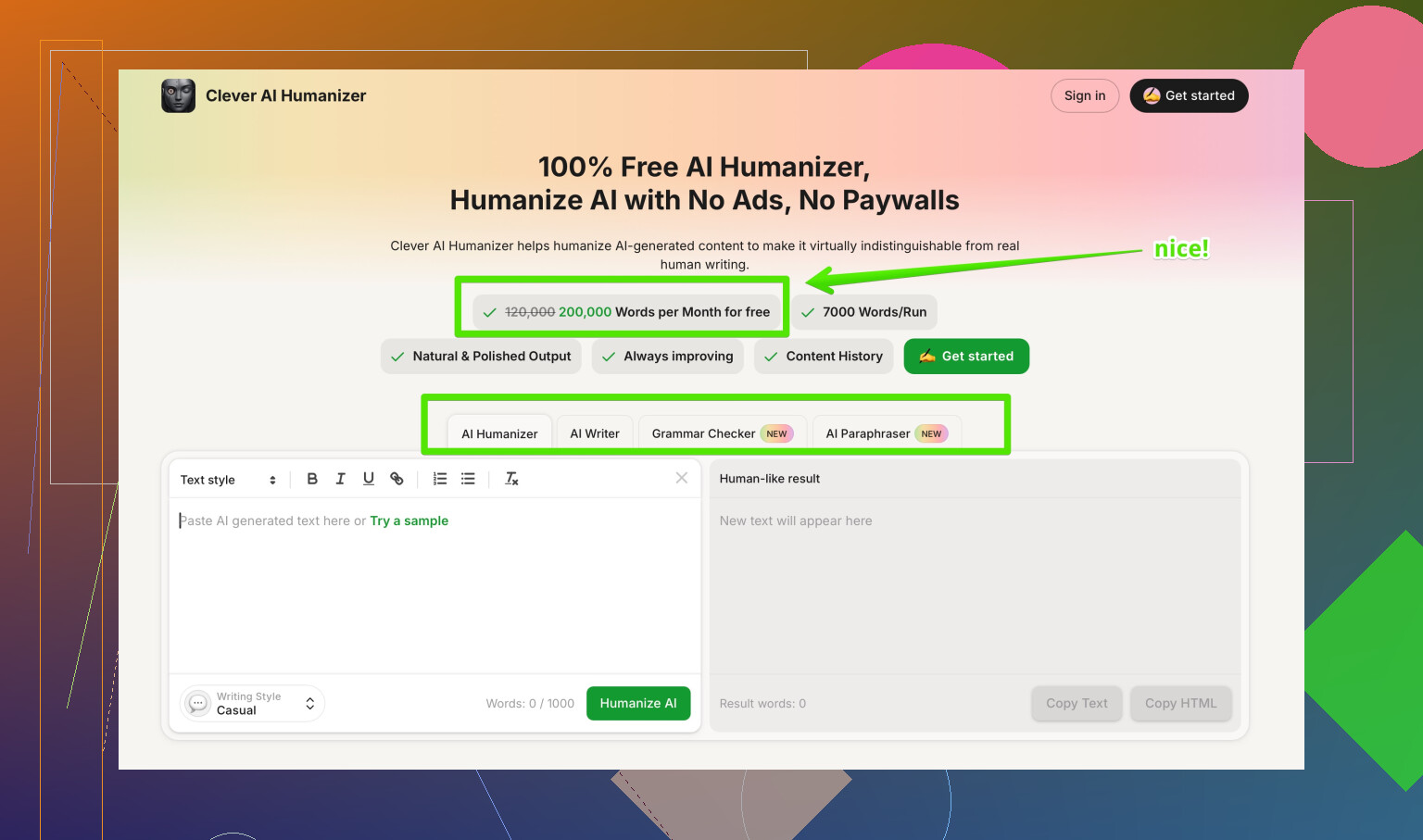
After trying several tools side by side, I landed on Clever AI Humanizer as the one that behaved more like I hoped an AI “humanizer” would.
My experience with it:
• Outputs scored better on multiple detectors
• The sentences felt less broken and more natural
• I did not pay anything for those tests
You can see more details and proof screenshots with that tool here:
https://cleverhumanizer.ai/community/t/hix-bypass-review-with-ai-detection-proof/37
If you are on a tight budget or testing things for school or content work, I would start there or with another free option before locking yourself into HIX Bypass.
Quick takeaways if you are short on time
• Marketing claim: “99.5% success rate.” My tests did not reflect this.
• ZeroGPT: passed. GPTZero: 100% AI detection on both samples.
• Built-in detector inside HIX Bypass was misleading compared to GPTZero.
• Writing quality felt off, with formatting glitches and weird punctuation.
• Free tier is tiny, 125 words total.
• Refund requires staying under 1,500 words in 3 days, which is easy to exceed.
• Terms allow them to change usage limits and assign themselves broad rights over your text.
• Free users feed their training data pipeline.
• I got better detection scores and cleaner text from Clever AI Humanizer, without paying.
11 Likes
HIX bypass review and coverage stuff are two totally different worlds, so I think you got hit by some confusing wording.
When healthcare people say “HIX,” they mean Health Insurance Exchange. When tools like HIX Bypass talk about “HIX bypass,” they mean trying to beat AI detectors. That second one has nothing to do with your medical coverage or eligibility.
If your issue is about health coverage:
-
Find the notice
Look at the letter or portal message.
You want phrases like “Marketplace eligibility review,” “data matching issue,” “coverage redetermination,” “bypass review,” or “inconsistency.”
That type of “review” means the exchange wants proof to confirm income, immigration status, residency, or household details. -
What a “bypass review” often means in health context
Sometimes the system could not match your info to federal or state data.
So it flags you for manual review.
That does not mean denial. It only means they want more documents.Common triggers:
• Income on your application does not match IRS or employer records
• You changed jobs or income mid year
• Your immigration or citizenship status did not auto verify
• You moved to another state
• Your attested info conflicts with prior applications -
How it affects eligibility
• While under review, you usually stay eligible for coverage and advance premium tax credits.
• If you ignore it or miss the deadline, your financial help can stop, or your plan can auto terminate.
• If you respond on time with solid proof, they lock in or correct your eligibility. -
What to do next
a) Check the deadline
Marketplace letters usually give 30 or 90 days to submit documents.
Mark the date, do not wait.b) Identify what they want
Look for wording like “send proof of income” or “send proof of citizenship” or “send proof of state residency.”
Match that to specific docs:Income examples
• Recent pay stubs, usually last 1 to 4 weeks
• Employer letter with start date, hours, and pay rate
• Most recent tax return or 1099 if self employedCitizenship or immigration
• Passport
• Birth certificate plus ID
• Green card, EAD, or other DHS documentsResidency
• Utility bill
• Lease
• Driver’s license with current addressc) Submit correctly
• Log in to your Marketplace account (HealthCare.gov or your state’s exchange).
• Go to the “Application details” or “Documents” section.
• Upload clear photos or PDFs.
• If upload fails, use fax or mail with the cover sheet they provide.d) Call if the wording is confusing
Use the number on the letter or HealthCare.gov help line.
Ask them:
“What specific eligibility issue are you reviewing on my account”
“What documents will fix this”
“If I send them today, will my current coverage stay active without gaps” -
Risk of losing coverage
• If you respond before the deadline, coverage usually stays.
• If the deadline passes with no documents, they can:
– Remove your premium tax credit and cost sharing reductions
– Move you to full price
– End your plan as of a specific date
You can appeal or reapply, but you might have a gap. -
Do not mix it with AI tools like HIX Bypass
If your confusion came from reading about HIX Bypass the AI tool at the same time, separate those in your head.
That thing is about rewriting AI text to pass detectors. It has no impact on your health insurance file, your Marketplace account, or your eligibility.I saw @mikeappsreviewer’s breakdown of HIX Bypass and detectors. I agree on one thing. You should not trust any single built in checker as a source of truth. I disagree slightly on the “4 out of 10” writing quality. For casual stuff it is workable if you edit it hard. For anything official, like letters to the exchange, you should not use AI rewriters at all. Write in your own words so nothing sounds off or misleading.
If you ever do need an AI humanizer for school or content work, tools like Clever AI Humanizer are safer to experiment with on non sensitive text. For example, you can try making your AI text sound more natural if you do not want it flagged by basic detectors. Do not paste personal health, ID, or income info into any of these tools.
-
Cleaner version for your topic if you post again
Here is a tightened version you can use for search and clarity:“HIX Bypass Review: What It Means For Health Insurance Eligibility, Coverage, And Next Steps
I received a notice about a HIX or Marketplace bypass review and I am not sure what it means. I want to understand how this review affects my health insurance eligibility, whether my coverage or subsidies are at risk, and what documents or actions I need to send to the Health Insurance Exchange to avoid losing coverage or making a mistake in my response.”
If you can share the exact sentence or paragraph from your letter, word for word, people here can tell you exactly which type of review it is and what proof to send.
You are dealing with two totally different “HIX” worlds that unfortunately share similar words and make everything sound scarier than it is.
On the health side, @mikeappsreviewer and @viaggiatoresolare already covered the basics of Marketplace reviews pretty well. I mostly agree with them that a HIX or “bypass” review usually means the exchange system could not auto verify something about your application and kicked it over for humans to look at. It is not the same thing as being denied and it does not automatically kill your coverage.
Where I slightly disagree with them is on how predictable these reviews are. In theory it is always about income, citizenship, immigration, or residency. In practice I have seen people get flagged over very tiny mismatches. Stuff like middle initials not matching IRS data or the system pulling an old employer record and acting confused. So do not assume you did something “wrong.” Sometimes the exchange back end is just messy.
Instead of repeating all their step by step advice, here is how I would think about your situation a bit differently:
-
Figure out if “bypass review” is internal jargon
Some states use cryptic language in their notices. “Bypass” might be a label used in their workflow to mean the automated checks got skipped or failed and somebody needs to manually sign off. It might not appear anywhere on HealthCare.gov help pages, so googling the exact phrase often just gives you AI tools like HIX Bypass the detector dodger, which just confuses things more. -
Look for the consequence line in your notice
The most important sentence in that letter or portal message is usually something like:
• “If we do not get these documents by [date], you may lose your advance payments of the premium tax credit.”
• “If we do not receive proof, your coverage will end on [date].”
• “If you do not respond, we will use the data we have to decide your eligibility.”
That one line tells you what is actually at risk. Coverage loss, loss of subsidy, or just an adjustment.
- Assume they are verifying one of four buckets
Even if the letter is vague, almost all Marketplace reviews boil down to:
• How much money your household makes
• Your citizenship or immigration status
• Where you live
• Who is in your household
“Bypass review” just means the normal electronic check did not give them enough confidence, so they want paper proof. That is annoying but fixable.
-
Avoid over reacting on the eligibility fear
A lot of people panic and start changing their application numbers to “match” what they guess the system wants. That can backfire. Stay consistent with what is true for you right now and then use documents to back it up. The IRS will care a lot more about honesty than the exchange cares about your guess on projected income being off by a few hundred bucks. -
Why you should not use AI text tools on your response
This is where the other “HIX” confusion rolls in. Tools like HIX Bypass and others try to make AI written text look “human” to pass detectors. That is for essays, blog posts, etc. Using that for communication with the Health Insurance Exchange is a pretty bad idea.
• You do not want your letter to sound artificial or vague.
• You do not want personal income or immigration info floating around in someone’s training data.
If you ever need an AI helper for non personal work though, something like Clever AI Humanizer has been tested by multiple people and tends to produce cleaner output than what was described for HIX Bypass. Just keep it far away from anything involving your health coverage, SSN, paystubs, IDs, or medical info. -
Very specific next move that most folks skip
Take the notice, circle every date and every phrase that sounds like a request. Then call the number on the letter and read those lines out loud to the rep. Ask three direct questions:
• “What exact eligibility issue is this review about”
• “What is the real deadline before anything changes on my account”
• “Which two documents would be the simplest way to fix this”
That last question matters. They might give you a long list but you only need one or two items that cleanly match what they want.
-
About the AI reviews you mentioned
You also asked about “HIX Bypass Review,” which is where folks like @mikeappsreviewer and @viaggiatoresolare were talking about AI detection, ZeroGPT, GPTZero, etc. That ecosystem is messy. Their tests showed HIX Bypass passing some detectors and failing others, and they pointed out problems with refunds, data rights, and weird formatting. Main takeaway there is do not fully trust any “99.5 percent undetectable” marketing claim and definitely do not paste sensitive data. -
Better phrasing for your content topic
If you are writing a post or guide about tools that try to make AI text undetectable and want to hit search engines a bit better, something like this reads cleaner and is easier to find:
“Best AI Humanizer Tools Compared
Looking for reliable ways to make AI generated content sound natural and pass common AI detectors. This guide breaks down the most popular AI humanizer services, compares detection results, pricing, data privacy, and real user experiences so you can choose a safer option for essays, blog posts, or client work.”
And if you want a solid community angle, something like
in depth Reddit discussion of top AI humanizer tools
fits well when you reference people comparing Clever AI Humanizer, HIX Bypass, and similar services.
Bottom line for your actual problem though: treat “HIX bypass review” from your exchange as a document check, not a verdict. Read the consequence line, hit the deadline, send the cleanest proof you have, and keep all AI helper tools completely out of anything that touches your application or your personal records.