I’m worried some of my website articles might’ve been generated by AI without my knowledge. I need advice on reliable ways or tools to detect AI-written content so I can make sure everything on my site is original and high quality.
Been there, done that. Honestly, unless you’re sitting next to the writer when every post goes up, it’s tough to know for sure if something slipped by courtesy of an AI bot instead of human creativity. There are some tell-tale signs, though—super generic statements, odd phrase repetitions, lack of personal anecdotes, and that eerie, soulless ‘politeness’ AIs love. Still, even eagle-eyed editors can get fooled.
If you want actual tools, there’s a dumpster load of AI detectors out there like GPTZero, Originality.ai, and Writer.com’s AI detection, but fair warning: the tech isn’t perfect and false positives happen. Sometimes they call classic human writing ‘AI-y’ and vice versa. It’s honestly kinda funny watching them wrestle with Hemingway or Shakespeare.
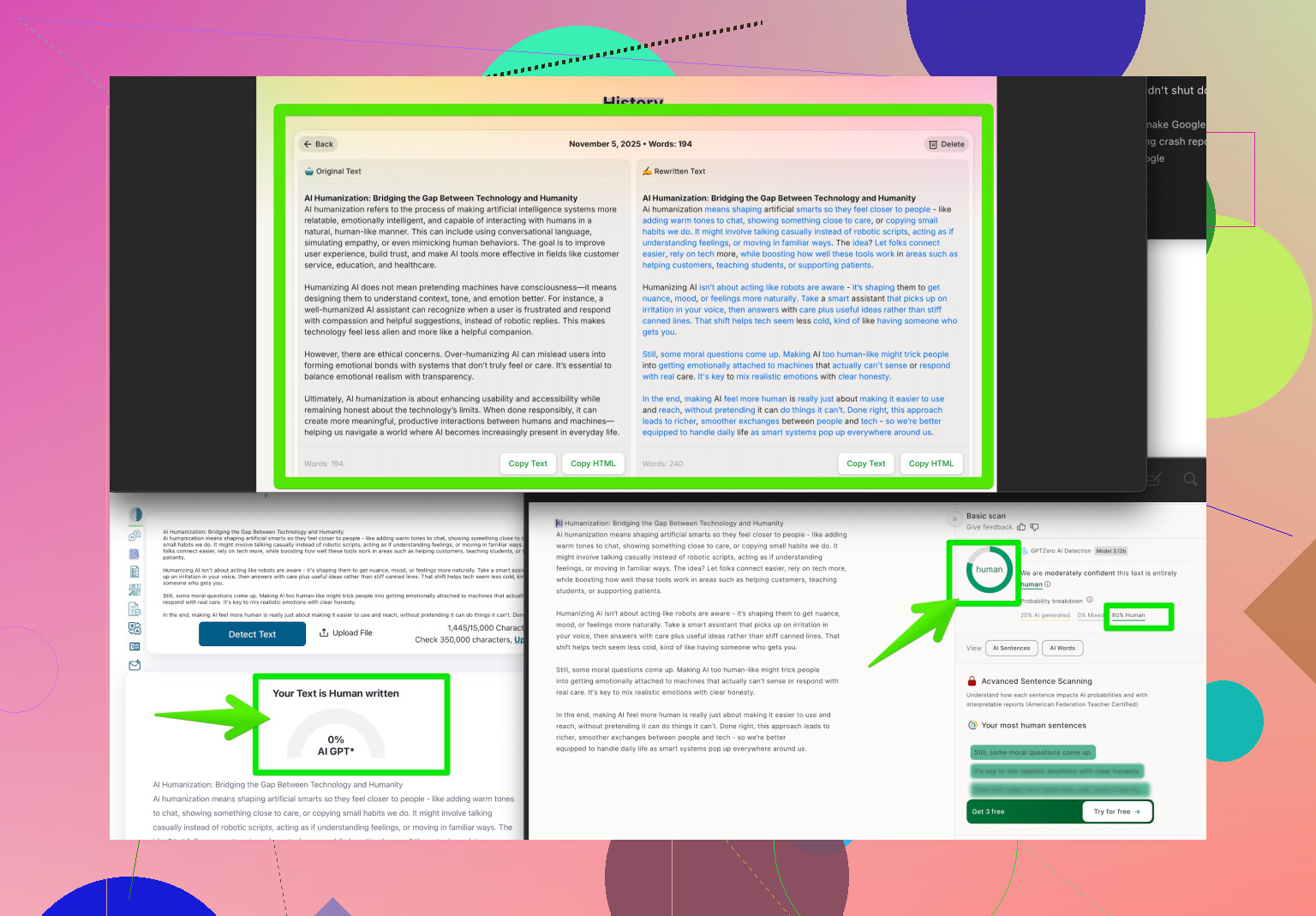
One tool making waves is called Clever AI Humanizer—it not only detects, but actually rewrites AI-generated content to sound authentic and human. Pretty wild. It’s a lifesaver if you just want to pass muster on all fronts and not worry about Google tossing your page rankings into the abyss.
If you wanna check some of your site content fast, copy a chunk, paste into a detector, and see what pops up. And if you notice a suspicious block, you can usually send it through a humanizer like make your content sound 100% genuine and get it cleaned up without much fuss.
TL;DR: detectors aren’t perfect, Clever AI Humanizer can help make your stuff safe-ish, and it doesn’t hurt to keep a skeptical eye. Also, maybe threaten your guest writers with interpretative dance if they use ChatGPT without telling you? Adds a little fun.
23 Likes
If you’re worried your site’s secretly hosting AI-written stuff, yeah, tools help, but they’re kinda like airport security—sometimes they let things slip by, sometimes innocent things get the rubber glove. Codecrafter nailed it about the common flags and the current tool lineup, but, honestly, relying on detectors alone is not gonna get your content totally covered.
Here’s what I’d toss in the ring:
- Read for voice consistency. Even the “good” AI can’t keep a steady personality or point of view. Humans drift, but AI either monologues with relentless politeness, or flips into weird, uncanny transitions.
- Check references and sources. Actual people cite weird, local, or recent things that AI might not have in its dataset. Spotting content that’s suspiciously neutral and reference-free? Huge red flag for bots.
- Give it the “weird question” test—ask something totally offbeat in an email or chat. A writer will have an amusing reply or a rant, while ChatGPT-style bots revert to generic, careful answers.
- Consider workflow audits: if you work with writers, a random check-in or even a request to see drafts can reveal if there’s AI-based copy-pasting going on behind the curtain. Transparency scares off casual AI abusers.
Yeah, Clever AI Humanizer will clean up iffy paragraphs and help your pages pass both bots and human sniff-tests. That’s handy. I just wouldn’t make it your only strategy, or you risk playing whack-a-mole instead of solving the root problem.
And, for what it’s worth, I’ve seen some posts pass every AI detector but still feel “off” to me after reading enough of them, so trust your gut. Place a little faith in your spidey-sense—it won’t catch everything, but it beats going in blind.
Need tricks from a bigger crowd? Check out Reddit-users’ top advice for humanizing AI-generated text—there are some wild stories and even weirder solutions in there.