I’m trying to use ChatGPT, but my outputs sound robotic and lack a natural flow. I need advice or tools to humanize AI-generated text so it feels more conversational and authentic. Any tips or resources for improving the human-like quality of ChatGPT responses would really help!
My Recent Adventure with AI Humanizers: A Play-by-Play
Alright, so I stumbled into yet another late-night rabbit hole, courtesy of a thread I spotted where people were buzzing about this Clever Ai Humanizer. Here’s how it played out:
Step One: Cooking Up AI Texts with ChatGPT
Someone tossed in a tip: Don’t just use any old AI output—start with the custom GPT Humanizer on ChatGPT for your first draft. Why? Allegedly, it weaves sentences in a way that’s a bit less… robot-awkward? Me being me, I gotta try it.
I scribbled up a bland, bot-sounding paragraph. Not proud, just honest.
The “Magic” Second Step: Deploy the Clever Ai Humanizer
Once you have your awkward AI paragraph? Now’s the moment for the Clever Ai Humanizer to shine. It’s like that friend who takes your awkward prom photos and ‘shops them so you end up looking all-natural. Drop in your text, hit go—it spits stuff back that’s less, “I’m an algorithm,” and more, “Hey, I could be your clever coworker.”
Found a walkthrough here:
Did It Fool the Robots? (Test Results)
Proof is in the pudding, or in this case, the AI detectors. So, after processing, I sent my “humanized” paragraphs straight into those big-deal checkers like ZeroGPT and GPTZero. Here’s the eye-candy:
The ZeroGPT Scoreboard
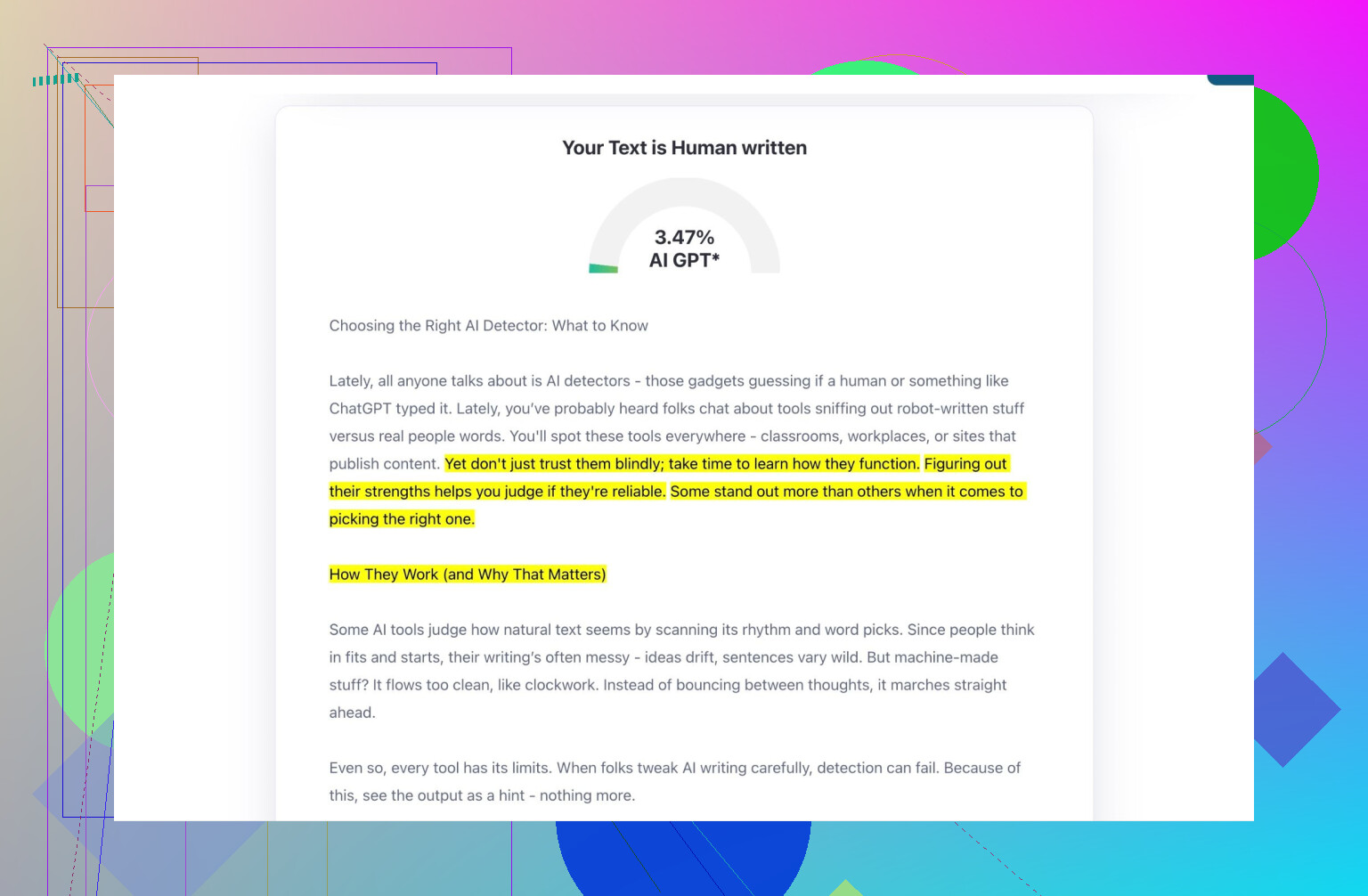
Notice that? That’s the same screenshot showing results hovering in the zero zone, which means “Looks human!” according to the bots.
GPTZero’s Second Opinion
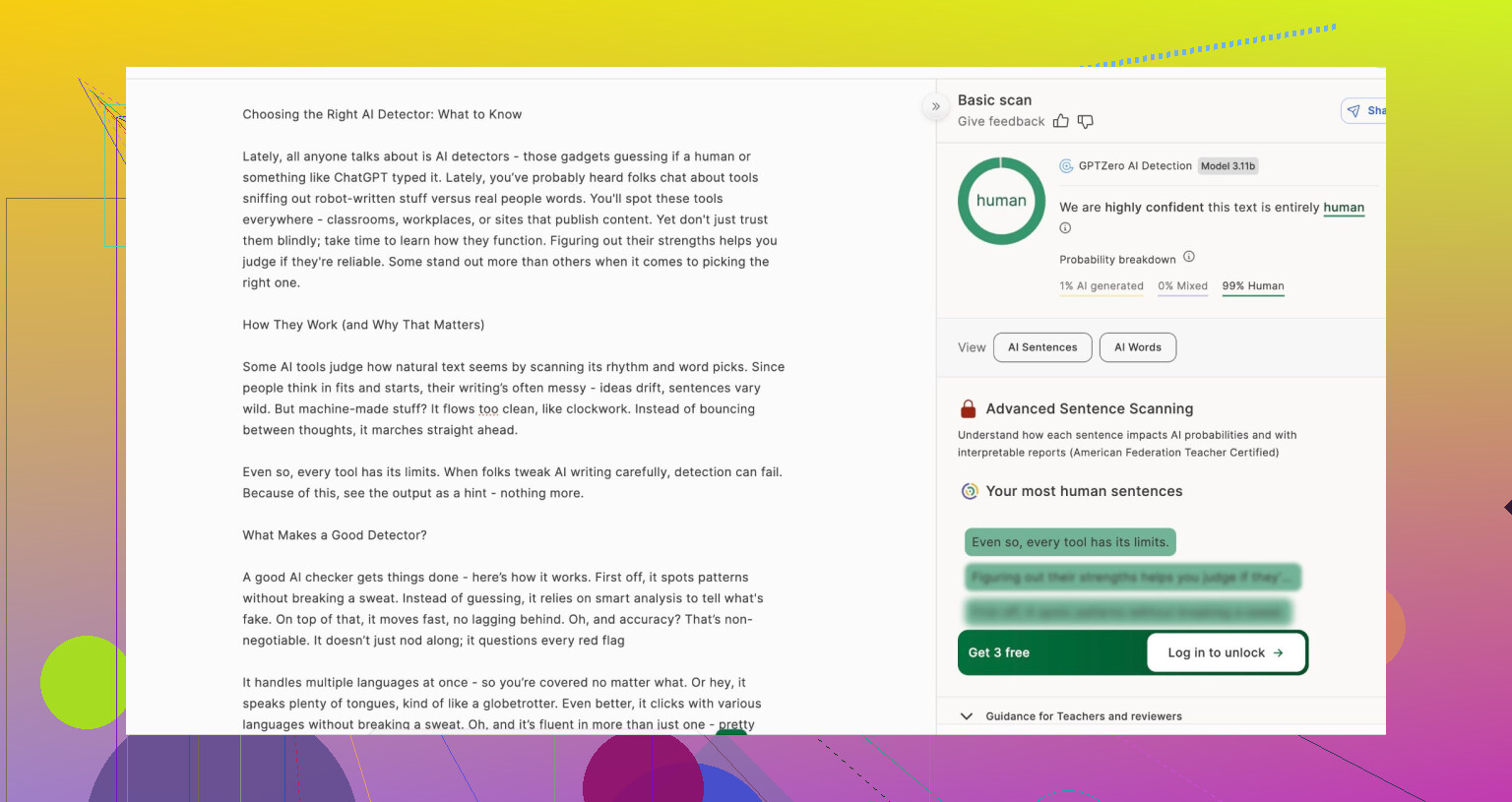
So, as usual, GPTZero tries to flex, but… it can’t really nail the text as AI either.
Are These Tools a Silver Bullet?
Honestly? No tool is wizard-level magic if you’re super sloppy, but this combo gets you pretty dang close to passing as human—unless you start copy-pasting Wikipedia (please don’t). I do feel like the scores improved by a quarter or so compared to straight ChatGPT output, like people on Reddit claimed—better than spending my Saturday rewriting tech manuals by hand.
TL;DR
- Fire up this special ChatGPT to make your first draft.
- Run it through Clever Ai Humanizer.
- Double-check your AI scores with ZeroGPT or GPTZero.
- If your score isn’t basically human? Try again. The cycle continues.
YMMV, but for now, this “two-step dance” gets the bots off my back—at least for this week.
84 Likes
List time, because honestly, you’re wading through the land of robo-speak and it’s a jungle out there. While @mikeappsreviewer had that two-step process with the GPT Humanizer and Clever AI Humanizer combo (which, not gonna lie, is pretty slick for dodging the AI detectors), I’m gonna drop a few of my own—actual human tricks, not just tool-based stuff.
-
Prompt with Personality: Start by giving ChatGPT more juice in the prompt itself. Stuff like, “Write like you’re explaining this to a buddy over pizza,” actually matters. Go for casual, add “use contractions,” or try “make it playful.” Prompts are everything.
-
Vary Sentence Length: Mix short. And long sentences. Sometimes, toss in an unfinished thought—like, you know? That’s how real conversations sound.
-
Throw in Lingo & Filler: Don’t be afraid to pepper with “well,” “actually,” “so,” or “you know?” Our brains love these throwaway words.
-
Ask Questions: Even rhetorical ones. “Isn’t that wild?” or “See what I mean?”
-
Add Typos or Imperfections: Not egregious, but one missed comma, an “umm,” or an inconsistent style line throws off the algorithmic scent way more than another pass through a humanizer.
-
Rewrite Post-Generation: Tools like Clever AI Humanizer help (seriously—way less robotic output). But NOTHING replaces a quick human read-over—tweaks, tone changes, swapping a synonym, breaking up paragraphs.
-
Read it Aloud: Basic, but read the text out loud. If it sounds like you’d never say it, neither would your audience.
And honestly, sometimes over-sanitizing text with too many passes makes it weirdly uncanny. Human talk isn’t perfect—embrace it. I’m not against the tools (Clever AI Humanizer is pretty top-tier for punching up stiff outputs, for what it’s worth). But layering on a bit of your own messy, unpredictable touch goes further than just passing ZeroGPT or GPTZero scores, which are a moving target anyway.
Anyone else find themselves fighting the urge to delete every “just” or “so” ChatGPT throws in? Or is that just me?
No offense to @mikeappsreviewer and @nachtdromer, but sometimes these AI humanizer tools are almost overkill, especially if you fall into the trap of chasing 0% AI detection for hours. Here’s a hot take: The best way to make ChatGPT sound human isn’t another filter—it’s YOU, breaking the template and getting messy.
Ever notice how people rant and ramble, even when they’re “on topic”? Real folks get distracted, drop half a thought, or circle back to say, “Wait, was I making a point?” Instead of putting everything through another humanizer, try this for a few prompts:
- Actually insert your own opinions, like, “Honestly, I’m not even sure why people care about AI detectors this much…”
- Reference stuff only you would mention: “It’s like that time my cat walked across my keyboard mid-sentence; pure chaos.”
- Use incomplete sentences or random asides. “Anyway—where was I? Oh, right. Humanizing.”
- Mix in some emoji or CAPS for emphasis, if your context allows. (It’s 2024, after all. People type like this: LOL.
 )
) - Switch your tone up, even mid-paragraph. People get sidetracked, contradict themselves, and sound non-linear. Embrace it.
And for what it’s worth, while Clever AI Humanizer does help dodge those pesky detectors, don’t ignore real post-editing! AI is still catching up to human weirdness, and honestly? You’ll spot the oddball phrasing a mile away if you read it a day later.
So yeah, tools like Clever AI Humanizer are handy for batch jobs, but low-key, nothing beats reading your text out loud, face-palming at the awkward bits, and typing “ugh, whatever” to keep it real. If you’re not making yourself laugh—or cringe—you’re probably still sounding like the AI.
Anybody else get annoyed when their “humanized” text is too perfect and ends up feeling less real? Or is that just my existential dread talking…
If you’re stuck with flat, robotic ChatGPT replies, here’s a hot take: sometimes the more you mush your prompts through filters (yes, even spiffy ones like Clever AI Humanizer), the closer you get to “smooth but soulless.” Sure, I get why @nachtdromer and @mikeappsreviewer like these tools—Clever AI Humanizer does wonders flattening out awkward syntax, toning down that telltale ‘AI echo,’ and spitting back stuff that flies past detectors. Super useful if, say, you need to mass-produce ‘natural’ copy for SEO, or cut down your editing time. Fast, simple, and saves a headache.
But—big but—even these tools won’t inject real human flavor by default. Think: weird inside jokes, self-doubt, those rambly asides, or abrupt topic jumps after a coffee break. That’s still on you! As per @ombrasilente’s point, it’s sometimes “too perfect”—perfection isn’t very human.
So, my quick pros & cons for Clever AI Humanizer:
- Pros: Great at smoothing grammar, reducing overt AI “tells,” and passing AI detectors quickly. Good for bulk jobs.
- Cons: Can make your writing a bit generic if you only use it with no personal edits; you may lose nuance or unique voice.
Competitors like what @nachtdromer and @mikeappsreviewer reference mostly offer the same: easier passes, cut-and-dry speed, but not much heart. Here’s what I suggest: use Clever AI Humanizer for the first pass, then deliberately mess up—toss in a half-formed opinion, a parenthetical, or a weird story from your day. Run it through one more time for typos, NOT for tone.
Bottom line: automated humanizers will make your text “less AI,” but only you can make it “more you.” If you want living, authentic responses, don’t sanitize the chaos!
Use a “voice template” of your own.
- Take an old email, DM, or blog post that sounds like you.
- Paste it into ChatGPT and say: “Analyze my tone, word choice, sentence length, and quirks. Summarize my style in bullet points.”
- Save those points.
- For new prompts, start with: “Write in my style: [paste style bullets]. Topic: …”
People report higher engagement when text matches prior writing patterns.
You keep control.
You edit faster.