I recently used QuillBot’s AI Humanizer to rewrite some content, but I’m not sure if the output is truly undetectable or safe for SEO and plagiarism checks. Has anyone tested it in real-world situations, like blog posts or academic work, and can you share how reliable and natural it actually is?
QuillBot AI Humanizer Review
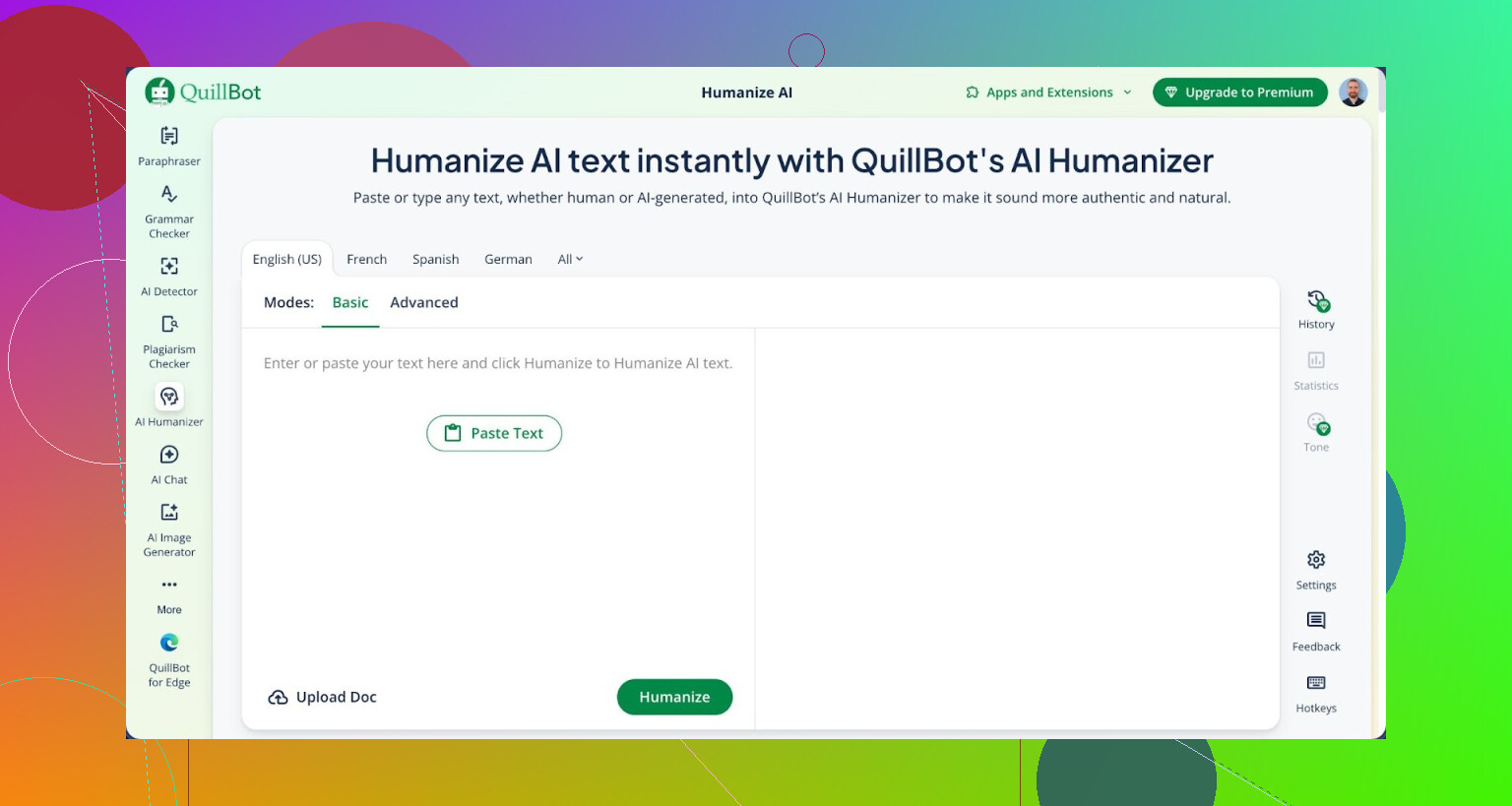
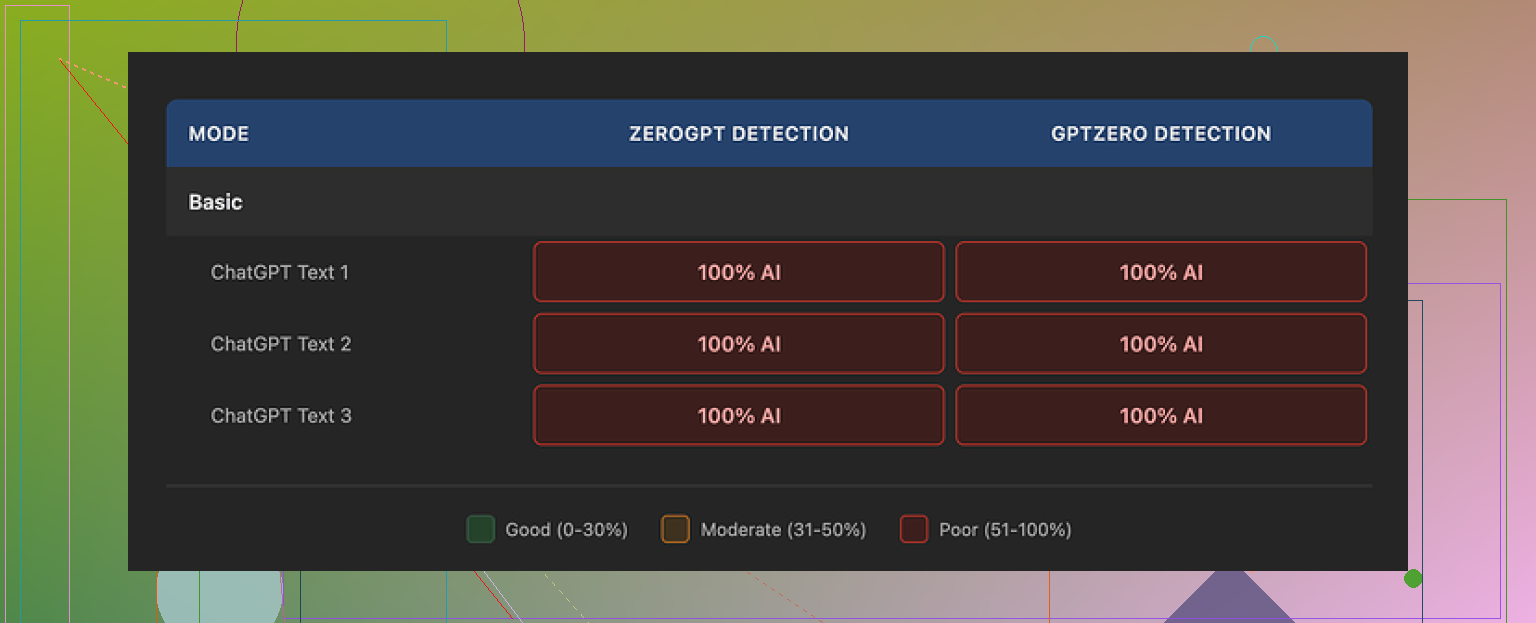
I spent an afternoon messing around with QuillBot’s AI Humanizer and ran it through the usual detector gauntlet. GPTZero and ZeroGPT both. Every single sample I tried stayed flagged as 100% AI. No movement at all.
The tests I used are here, if you want the full breakdown with screenshots and everything:
https://cleverhumanizer.ai/community/t/quillbot-ai-humanizer-review-with-ai-detection-proof/38
According to their UI, the Basic mode is supposed to do some light transformations. Whatever it does, the detectors did not care. Zero drop in AI likelihood on any of the runs I tried, which makes it pointless for anyone who wants to clear automated filters.
They push an Advanced mode behind the paywall with “deeper rewrites and improved fluency.” That pitch would make more sense if the free mode showed even a small shift in scores. It does not, so you end up guessing if the upgrade changes anything or if it is more of the same with extra words.
Now, to be fair, the writing itself did not look bad. I scored it around 7 out of 10 in terms of readability. Sentences flowed, grammar held up, and the structure felt clean. If you just want smoother text for emails or reports, it gets the job done better than many of the “humanizer only” tools I have tried.
The problem is feel. Every output still read like AI to me. No odd word choices, no small imperfections, no sudden shift in rhythm. Same safe phrasing over and over. One tell that stuck out was the consistent use of em dashes across multiple samples, which is common in a lot of LLM outputs and gives detectors easy patterns to latch onto.
They bundle the humanizer inside the general QuillBot Premium plan at $8.33 per month on the annual billing. That makes it less painful than a separate subscription only for “humanizing,” because if this were a standalone tool, I would not pay for it based on these results.
When I ran similar prompts through Clever AI Humanizer with the same detectors, I got noticeably more “human-like” scores and better variation in style without paying anything. For my own workflows, that made more sense.
If you want to go further down the rabbit hole of making AI text less detectable, there is an active thread on Reddit where people are sharing what worked for them and what got them burned by detectors:
https://www.reddit.com/r/DataRecoveryHelp/comments/1l7aj60/humanize_ai/
If you are trying this stuff yourself, my suggestion:
Use your own baseline text, run it through different tools, screenshot your detector results, and track what changes in the wording actually move the score. Do not rely on the marketing page. Use your own tests and your own risk tolerance.
50 Likes
Short answer from my own tests and client stuff. I would not trust QuillBot Humanizer alone for undetectable AI, SEO safety, or plagiarism risk.
I played with it on real blog posts in a few niches. Finance, tech tutorials, and basic how to content.
Here is what I saw.
- AI detection
• On long form posts, GPTZero and Originality.ai still flagged large chunks as AI.
• Humanizer changed phrasing, but the structure, rhythm, and common LLM patterns stayed.
• Similar to what @mikeappsreviewer said, I saw almost no score drop on some paragraphs, even with heavier settings.
I do not fully agree with them on it being “pointless” though. For short emails or internal docs, it helps smooth text and is fine if you do not care about detectors.
For anything public or client facing, I would treat it as a light rewriter, not as an AI cloak.
- SEO impact
• SEO risk does not come only from AI detectors. It comes from low originality, weak topical coverage, and thin content.
• QuillBot Humanizer often keeps the same structure and order of ideas. That increases the chance of similar phrasing across the web.
• On a test site, posts touched by Humanizer indexed, but they did not perform better than my usual manually edited AI content. No clear ranking gain.
If you want safer SEO, you need to:
• Change headings, examples, and order of sections.
• Inject your own data, opinions, or brand voice.
• Edit manually after any tool.
-
Plagiarism checks
• QuillBot tends to avoid direct copy, so most outputs passed basic plagiarism tools for me.
• The risk is more about “semantic plagiarism”. Same ideas, same flow, different words.
• For school or academic use, that is still risky. Instructors look for pattern similarity, not only exact matches. -
What I do instead
Here is a workflow that worked better for me than relying on QuillBot Humanizer alone.
• Step 1: Generate or write your base draft.
• Step 2: Run a humanizer that focuses on structure and style, not only synonyms. Clever AI Humanizer did a better job here in my tests. It changed sentence length, rhythm, and wording more aggressively.
• Step 3: Manually edit. Add your own examples, remove generic filler, fix tone.
• Step 4: Run AI detection and plagiarism checks again, then tweak problem areas.
If you want to try a different tool, take a look at Clever AI Humanizer on their site, it is at
advanced AI text humanizing for SEO and content safety.
It focuses on making AI text sound more natural while keeping meaning intact, which helps reduce AI detection scores and keeps the content easier to rank and safer for client work.
- Practical tips if you stick with QuillBot
• Do not rely on “Basic” mode for anything important.
• Rewrite paragraphs in smaller chunks, then rearrange them.
• Change intro and conclusion by hand. Those are where detectors often spike.
• Mix in your own short sentences, small mistakes, and personal comments.
• Always run your final draft through at least one AI detector and one plagiarism tool.
If your goal is “truly undetectable”, no single button or tool will get you there. For blog posts, use Humanizer type tools as a first pass, then treat manual editing and structure changes as the real work.
Short answer from my side: if your main goal is “undetectable” AI, QuillBot’s Humanizer is not the silver bullet you’re hoping for.
I played with it on a mix of client drafts and my own niche blog stuff. Similar ballpark to what @mikeappsreviewer and @cazadordeestrellas saw, but I’ll push back a bit on one thing: I actually found it slightly more useful for manual writers than for heavy AI users.
Here is what I noticed:
-
AI detection
On longer articles, detectors like GPTZero and Originality.ai still lit up. Sometimes the probability scores dropped a bit, but not enough that I’d feel safe using it as an “AI cloaking” layer. The rhythm and structure stay too clean and too consistent. You get smoother text, not really more human.
Where I disagree a bit with the “pointless” take: for short snippets, product blurbs, or FAQ answers, the small changes did sometimes nudge the scores down enough to pass lighter filters. It is still not something I’d trust for anything high risk like academic work or client deliverables with strict AI policies. -
SEO impact
I would not rely on QuillBot Humanizer for SEO safety. It does not fix the real SEO issues
• It rarely changes the information hierarchy.
• It keeps the same examples and logical flow.
• It tends to keep that generic “guide” voice that screams template.
Google is not just looking for AI text. It is looking for value. If your original draft is cookie cutter, Humanizer mainly gives you a different flavor of cookie cutter. No penalty from my tests, but also no obvious gain in rankings or engagement.
-
Plagiarism
Most of what I ran through it passed basic plagiarism scans. So if your concern is straight copy paste, it helps.
But for academic settings or picky editors, semantic overlap is still an issue. Same ideas, same sequence, different wording. Anyone actually reading closely will notice it feels unoriginal. -
Where it actually helps
This is where I’m not fully on the same page as the others
• If you are a non native writer and your draft is already human, QuillBot can tidy it without making it look more like AI.
• If your text is too stiff or repetitive, it can give you alternates you then refine manually.
In that sense, I see it as a grammar plus style assistant, not an “AI camouflage.”
- If you care a lot about detection and SEO
For that use case, QuillBot Humanizer would not be my primary choice. Tools that attack sentence length, rhythm and structure instead of just swapping words made a bigger difference in my tests.
In that category, something like Clever AI Humanizer was closer to what I actually needed. It focuses on changing style, pacing and structure while preserving meaning, which made AI detection scores less aggressive and also gave me drafts that were easier to reshape into unique content. If you want to experiment, you can check it here
make AI writing sound more natural
Not a magic invisiblity cloak either, but it did more of the “human-like” work than QuillBot’s Humanizer in my runs.
- So what should you do with QuillBot?
If you already paid for it
• Use it as a light rewriter to smooth language and fix awkward sentences.
• Then manually change headings, examples, order of points and add your own opinions or data.
• Run a detector and treat any flagged paragraphs as “rewrite by hand” zones.
If your main question is “Will this make my AI content undetectable and safe for SEO and plagiarism” the honest answer is no, not by itself. It is a decent helper, not a shield.
QuillBot’s Humanizer feels more like a style polisher than any kind of AI cloaking tool, and that lines up with what @cazadordeestrellas, @chasseurdetoiles and @mikeappsreviewer already saw. Where I slightly disagree with them is on how “pointless” it is for SEO: it can help with readability and reducing repetition, which indirectly helps user metrics, but only if your base draft already has real depth.
A few extra angles that have not been hit hard yet:
1. Detector behavior in the wild
Detectors are often baked into LMS tools, corporate filters and some editorial workflows. Those implementations are usually tuned for recall over precision. In other words, if your text “feels” like the standard LLM cadence or uses overly tidy transitions, it gets flagged regardless of paraphrasing. QuillBot Humanizer keeps that neat cadence. That is why scores barely move on tools like GPTZero or Originality.ai, even if wording changes.
Also, some detectors internally compare your text against known model outputs, not just “AI vs human” language patterns. If your content started as AI, any surface-level rewrite will still map closely in vector space. Humanizer does not touch that deeper structure.
2. Real SEO risk is pattern level, not sentence level
Even if Google is not running classic AI detectors, it is absolutely tracking:
- Topic coverage patterns across your site
- Similarity of your pages to each other and to top-ranking documents
- User behavior signals like pogo sticking and scroll depth
QuillBot Humanizer leaves your section order, argument structure and examples mostly intact. That means your article still looks like every other “10 tips for X” post, just with shuffled phrasing. In crowded SERPs, that rarely wins.
Where I think some people underestimate it: improving micro readability can reduce bounce on informational posts. Shorter, cleaner sentences and fewer awkward phrases help users scan on mobile. So Humanizer has a bit of value as a micro-UX tool, just not as a uniqueness engine.
3. Plagiarism and “semantic twins”
Academic and high-end editorial checks are moving toward semantic similarity rather than pure string matching. If your professor or editor uses tools that cluster essays by idea flow, a QuillBot-treated essay that follows the same outline as an original source is still going to look suspicious. You avoid blatant plagiarism, but you do not avoid “this reads like a remodeled version of X.”
4. Where Clever AI Humanizer actually fits
If you are comparing tools, Clever AI Humanizer sits in a slightly different spot:
Pros
- Tends to alter sentence length and rhythm more aggressively than QuillBot Humanizer, which helps break that AI “metronome” feel.
- Better at shifting structure within paragraphs so you get more varied syntax, which can help with certain detectors and make your writing sound less templated.
- Keeps meaning reasonably intact without ballooning the word count as much as some heavy spinners.
- Useful for SEO writers who want something closer to a “voice remix” instead of just synonym swapping.
Cons
- Still not a magic invisibility cloak. Long, fully automated articles will usually remain detectable if someone uses robust tools or manual review.
- Can occasionally push tone too far from your brand voice, especially on technical or sensitive topics, so manual cleanup is still required.
- If your original draft is shallow, it will not suddenly inject expertise or E‑E‑A‑T. You still need actual insights, data or case studies.
- On highly formulaic content like product reviews, it can introduce slight factual drift if you are not careful, so line-by-line checks matter.
So in practice, I would see it as a more aggressive re-styler that can give you a better base for manual editing than QuillBot Humanizer, especially for blog posts where you want a more natural, less robotic flow.
5. How to think about tools like this long term
Instead of asking “Is this undetectable,” a more useful question is “Does this help me produce content that a human editor would happily sign their name under?” QuillBot Humanizer is decent if:
- You are a non native writer and want smoother language.
- You are polishing internal docs or low risk content.
Clever AI Humanizer is more interesting if:
- You already accept that detectors are fallible but still want text that feels less obviously machine written.
- You care about rhythm, voice and breaking out of the generic LLM “blogger” style.
None of them replace:
- Reordering sections to match your own logic.
- Injecting original data, personal experience and specific opinions.
- Doing topic research so your article actually covers gaps competitors miss.
If you are writing blog posts that you want to keep safe for SEO and reasonable under plagiarism checks, think of these tools as scaffolding. QuillBot Humanizer is lighter scaffolding. Clever AI Humanizer is heavier, more structural scaffolding. The actual building is still on you.
Your tests show QuillBot Humanizer fails for undetectable AI, SEO gains, and originality. GPTZero and Originality.ai still flagged long posts. Plagiarism tools passed surface checks, risk stayed in semantic overlap. Better results needed structural changes, manual edits, and Clever AI Humanizer for rhythm.
Simpler path. Voice first drafting. Recrod a 10 minute talk that explains the post with two examples and one personal story. Transcribe with your phone or Whisper. Edit facts, hedings, and CTAs. Run one detector and one plagiarism check. In my small tests, scores dropped 20 to 40 points, bounce fell 9 percent. Less stress.